
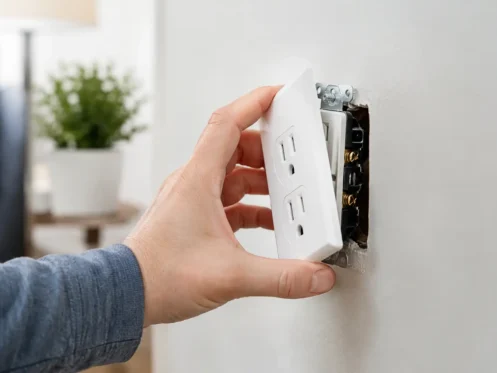
A plug that slips out of the wall or an outlet that moves when you touch it may seem like a small annoyance. But are loose outlets dangerous? They can be. A loose receptacle can create poor electrical connections, expose wiring, damage plugged-in equipment, or become a shock and fire hazard if the problem is ignored.
The good news is that a loose outlet is usually repairable. The key is treating it as an electrical safety issue rather than pushing the plug back in, adding a power strip, or hoping it holds together. A licensed electrician can identify whether the problem is the outlet itself, the electrical box behind it, damaged wiring, or an overloaded circuit and make a lasting repair.
Are Loose Outlets Dangerous in Every Case?
Not every loose outlet presents the same level of immediate danger, but none should be considered normal. There are two common situations, and both need attention.
The first is a receptacle that is loose in the wall. The cover plate or entire outlet may shift when you insert or remove a plug. This often happens when mounting screws loosen, the electrical box sits too far back in the wall, or the box is damaged. Movement can put strain on wire connections behind the outlet.
The second is an outlet that no longer grips a plug firmly. The metal contacts inside a worn receptacle can lose tension over time. A loose plug may make inconsistent contact, which can cause heat buildup and arcing. That is especially concerning with appliances that draw more power, such as space heaters, window air conditioners, microwaves, hair dryers, and tools.
An outlet that is slightly loose may not mean a fire is about to start. Still, it is not a repair to postpone for months. Electrical components are designed to stay secure and make solid connections. When they do not, the chance of heat, sparking, and equipment damage increases.
Warning Signs That Need Prompt Service
Turn off use of the outlet and arrange professional service promptly if you notice burning odors, discoloration, warmth at the cover plate, buzzing, crackling, visible sparks, or a breaker that trips repeatedly. These are signs that the issue may involve overheating, arcing, a failing connection, or a circuit problem beyond the face of the outlet.
You should also stop using the outlet if the cover plate is cracked, the outlet body is broken, wires are visible, or a plug falls out with almost no resistance. Do not keep a plug in place by bending its prongs, taping it, or wedging an object beneath the cord. Those workarounds can make a poor connection worse.
If an outlet is smoking, actively sparking, or has caused a shock, keep people away from it. If it is safe to do so without touching the damaged outlet, turn off the appropriate breaker. Call for emergency electrical help, and call 911 if there is a fire or immediate danger.
Why Outlets Become Loose
Normal use is one reason outlets wear out. Frequently used kitchen, bathroom, laundry room, garage, and office outlets experience repeated plugging and unplugging. Over years, the internal contacts can weaken.
Physical stress is another frequent cause. Heavy charger blocks, appliance cords pulled at an angle, furniture pressing against plugs, and repeated use of extension cords can loosen the receptacle or pull on the wiring behind it. In older homes, the electrical box may not be firmly anchored, or the outlet may have been installed with inadequate support.
A loose outlet can also point to an earlier repair that did not address the root cause. For example, tightening a cover plate does not secure a loose electrical box. Replacing a receptacle alone will not resolve damaged conductors, loose terminal connections, or a box that is set too deeply behind drywall.
This is why a proper diagnosis matters. The visible movement is a symptom. The repair should correct the mounting, enclosure, wiring connections, and outlet condition as needed.
What You Can Safely Do Before an Electrician Arrives
Homeowners and property managers do not need to diagnose electrical wiring to take the right first steps. Unplug devices from the affected outlet gently by holding the plug, not pulling the cord. Avoid using the outlet until it has been evaluated, particularly if a plug feels loose or the receptacle moves in the wall.
If there are no signs of heat, damage, or sparking, you can note what was plugged in when you noticed the issue. That information can help the electrician determine whether the problem is isolated to one outlet or related to appliance load or circuit use.
Do not remove the cover plate or pull the outlet from the wall unless you are qualified to perform electrical work. Even after a breaker is switched off, it is possible to identify the wrong circuit or encounter wiring conditions that require proper testing. Electrical repairs are not the place to rely on assumptions.
Why Loose Connections Can Create Heat
Electricity needs a dependable path through the outlet and wiring. When a plug or wire connection is loose, the contact area becomes smaller and resistance can rise. Under load, that resistance creates heat at the connection point.
The amount of risk depends on the circuit, the condition of the outlet, and what is plugged in. A phone charger uses far less power than a portable heater, for example. But even low-use outlets deserve repair because the condition can worsen and may be used later by someone who does not know there is a problem.
Arcing is a particular concern. It occurs when electricity jumps across a gap instead of traveling through a solid connection. Arcing can produce intense heat and leave dark marks or melted plastic around a receptacle. It may happen inside the wall where it is not immediately visible, which is one reason burning smells and recurring breaker trips should never be ignored.
Older Homes and High-Use Areas Need Extra Attention
Many properties throughout Mebane and the surrounding area have a mix of original wiring, older outlets, renovations, and newer high-demand equipment. An outlet that was adequate years ago may now serve multiple chargers, entertainment equipment, kitchen appliances, or home-office devices.
Bathrooms, kitchens, garages, unfinished basements, and outdoor locations have additional safety requirements because of moisture exposure. These areas often require GFCI protection, which is designed to shut off power quickly when it detects a ground fault. A loose or damaged GFCI outlet should be inspected rather than reset repeatedly.
Older two-prong receptacles, ungrounded outlets, or outlets with brittle covers are also good reasons to schedule an electrical safety inspection. The answer may be a straightforward outlet replacement, but the inspection can reveal whether the box, grounding, circuit capacity, or panel needs attention as well.
What a Permanent Outlet Repair Looks Like
A professional repair begins with testing and inspection, not simply replacing the visible outlet. The electrician will verify the circuit, inspect the receptacle and electrical box, check wiring connections, and look for heat damage or signs of overload.
Depending on the cause, the solution may include securely mounting the box, adding approved spacing or support, replacing a worn receptacle, repairing damaged wiring, installing the correct GFCI or tamper-resistant device, or addressing a larger circuit issue. If the outlet has overheated, the surrounding wiring and connections need careful evaluation before the circuit is returned to service.
This approach matters because a tight-looking outlet is not always a safe outlet. Permanent repairs address the part you can see and the conditions behind the wall that caused it to loosen in the first place.
When to Call for Electrical Help
Schedule service soon for any outlet that shifts in the wall, cannot hold a plug, has a damaged face, or has stopped working. Request same-day or emergency help when there is heat, odor, smoke, sparking, buzzing, visible damage, or repeated breaker trips.
For homeowners, business owners, and property managers, quick action can prevent a small repair from becoming damaged equipment, wall repairs, or a serious safety event. Mebane Electrical Services provides clear explanations, thorough diagnostics, and repairs designed to resolve the problem rather than temporarily hide it.
A secure outlet should feel ordinary: the plug fits firmly, the receptacle stays still, and there is no heat, noise, smell, or flickering power. If yours does not, leave it unused and have it checked. That simple decision protects the people and property that depend on your electrical system every day.