
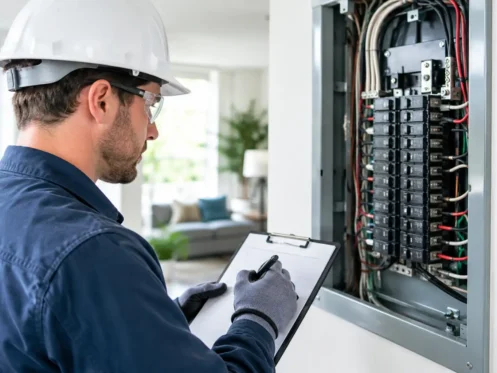
A breaker that trips once after a heavy storm may be an inconvenience. A breaker that trips repeatedly, an outlet that feels warm, or lights that dim when an appliance starts can point to a problem that should not be ignored. This electrical hazards checklist helps homeowners, landlords, and business owners recognize the warning signs early and decide when it is time to call a licensed electrician.
Electrical problems are not always dramatic. Many begin as small changes in how a switch, outlet, panel, or appliance behaves. Catching those changes can help prevent shock risks, equipment damage, and electrical fires while giving you time to make a planned repair instead of facing an emergency.
How to Use This Electrical Hazards Checklist
Walk through the property with normal use in mind. Check rooms where power demand is highest, including kitchens, bathrooms, laundry rooms, garages, workshops, utility areas, and older additions. For a business, also inspect employee work areas, break rooms, storage spaces, exterior lighting, and any place where extension cords have become a permanent workaround.
You do not need to remove outlet covers, open a panel, or test live wiring to complete a useful visual check. In fact, those tasks should be left to a qualified electrician. The goal is to notice clear warning signs, document where and when they occur, and arrange service before a minor issue becomes a larger repair.
Electrical Hazards Checklist: Signs That Need Attention
Breakers, lights, and power problems
A circuit breaker is designed to shut off power when it detects an overload or fault. Resetting it once may be reasonable after an obvious overload, such as several portable heaters on one circuit. Repeated tripping is different. It can indicate an overloaded circuit, a failing appliance, damaged wiring, or a fault that needs professional diagnosis.
Add these items to your checklist:
- Breakers trip repeatedly or will not reset.
- Lights flicker, dim, or brighten unexpectedly.
- An outlet, switch, or light fixture makes buzzing, popping, or crackling sounds.
- You smell a persistent burning or fish-like odor near electrical equipment.
- A section of the home or building loses power while the rest remains on.
Do not continue resetting a breaker to keep equipment running. Turn off or unplug what you can safely disconnect, then have the circuit evaluated. A breaker is doing its job when it stops power. The underlying reason it tripped is what needs attention.
Outlets, switches, cords, and appliances
Outlets and switches should fit securely against the wall, operate normally, and remain cool during ordinary use. A loose outlet can allow plug blades to move, which creates heat and can damage the connection behind the wall. Discoloration around an outlet or switch plate is especially concerning because it may mean overheating has already occurred.
Check for loose plugs, cracked plates, damaged receptacles, scorch marks, warm surfaces, and switches that feel loose or spark during normal operation. A small visible spark when plugging in certain devices can occur, but frequent sparking, a large spark, or any sign of heat deserves a professional inspection.
Extension cords are another common trouble spot. They are intended for temporary use, not as a permanent source of power for refrigerators, space heaters, air conditioners, office equipment, or tools. Avoid running cords under rugs, through doorways, or across high-traffic areas where insulation can be crushed or cut. If a room consistently needs more power, adding properly installed outlets is safer than relying on power strips and extension cords.
Electrical panel and service capacity
The electrical panel is the control center of your property. Keep the panel area clear and easy to access, and make sure the cover remains securely in place. Never remove the cover or reach inside the panel. Even when a main breaker is switched off, energized parts may still be present.
Look for corrosion, moisture, unusual heat, buzzing, burning odors, rust, missing breaker labels, or breakers that feel loose. Older homes may also have panels that were never designed for today’s electrical demand. Central air, modern kitchen appliances, home offices, hot tubs, EV chargers, and generators can place far more demand on a system than it originally supported.
A panel upgrade is not automatically required because a home is old. It depends on the panel’s condition, available capacity, the equipment being added, and the condition of the existing wiring. A licensed electrician can perform a thorough evaluation and explain the options clearly before work begins.
Moisture, outdoor equipment, and GFCI protection
Water and electricity are a dangerous combination. Bathrooms, kitchens, garages, basements, crawl spaces, exterior outlets, and pool-adjacent areas need special attention. Look for damp outlet covers, rusted exterior receptacles, water stains near fixtures, exposed wiring, or outdoor equipment with damaged covers.
Ground-fault circuit interrupter, or GFCI, protection is designed to reduce shock hazards in wet or damp locations. Many GFCI outlets have a TEST and RESET button. If one will not reset, trips without an obvious reason, or leaves part of an area without power, do not assume the outlet itself is the only issue. The problem may be elsewhere on the circuit.
Outdoor outlets should have weather-resistant covers, and exterior lighting should be secured and protected from damaged wiring. After a storm, downed lines, damaged service equipment, or water entering an electrical area should be treated as urgent safety concerns.
What You Can Safely Do Before Calling
Property owners can take a few sensible steps without attempting an electrical repair. Unplug a device that is smoking, unusually hot, or giving off an odor if it is safe to reach the plug. Turn off the relevant breaker if you can identify it without touching damaged equipment. Keep people away from wet electrical areas, damaged cords, and outlets that show signs of overheating.
It also helps to make a few notes for the electrician. Record which breaker trips, what was operating at the time, whether the issue happens in one room or several, and whether it began after a storm, renovation, appliance installation, or power outage. Clear details can speed up diagnosis and help identify the root cause.
Avoid using tape as a repair for damaged cords, replacing breakers with larger sizes, or bypassing a tripping GFCI outlet. Those shortcuts can turn a protective device into a serious hazard. Electrical repairs need the correct parts, proper connections, and a clear understanding of the circuit.
When an Electrical Issue Is an Emergency
Call for urgent professional help if you see smoke, sparks, flames, exposed live wiring, a hot panel, or signs of arcing. If there is an immediate fire risk, get everyone out of the building and call 911. Do not use water on an electrical fire.
A fallen utility line should always be treated as energized. Stay well away, keep others back, and contact emergency services and the utility provider. Do not attempt to move the line, even with a nonmetal object, and do not touch anything it may be contacting.
For less immediate but still concerning issues, such as repeated breaker trips, burning smells, warm outlets, or loss of power to a circuit, prompt service is the right choice. Waiting may allow heat or damage to build behind walls where the problem cannot be seen.
Make Electrical Safety Part of Property Care
An electrical safety review is especially worthwhile before buying or selling a property, after a renovation, when adding an EV charger or generator connection, or when managing an older home or commercial space. It is also useful after storm damage or whenever the electrical system begins behaving differently.
For rental and commercial properties, consistent inspections help protect occupants and reduce avoidable disruption. Pay attention to overloaded power strips, damaged tenant-supplied cords, blocked panels, and makeshift equipment connections. Small issues are easier to schedule and less expensive to address before they cause a shutdown.
If something on this electrical hazards checklist raises concern, trust the warning sign. Mebane Electrical Services can inspect the issue, explain what is happening in plain language, and provide a lasting repair plan so your property can stay safe and dependable.