
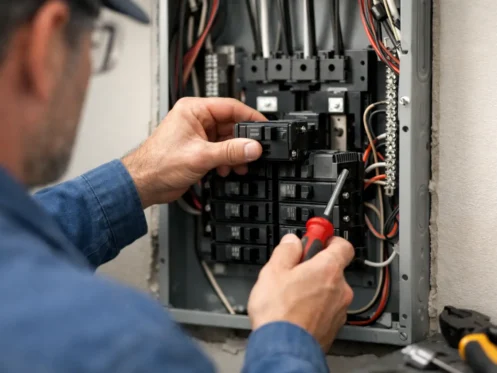
A circuit breaker that keeps tripping can be frustrating, especially when it shuts down a bedroom, kitchen appliance, HVAC equipment, or part of your business. But breaker replacement is not always the answer. A breaker trips because it is doing an important safety job: stopping power when it detects an overload, short circuit, ground fault, or another unsafe condition. The right repair begins with finding out why it tripped in the first place.
For homeowners and property owners, the goal should be more than getting the lights back on. It should be correcting the underlying issue safely, protecting the electrical system, and avoiding a repeat problem a few days later.
What a Circuit Breaker Does for Your Property
A circuit breaker is designed to interrupt electrical current when that current becomes unsafe for the wiring and equipment connected to the circuit. It is a resettable safety device, not simply an on-off switch. When it trips, it may be responding to too many appliances on one circuit, damaged wiring, a failing appliance, moisture around an outlet, or a fault inside the panel.
Modern homes may also have specialized breakers. Ground-fault circuit interrupter, or GFCI, breakers help protect people from shock hazards in damp locations. Arc-fault circuit interrupter, or AFCI, breakers are designed to detect certain dangerous arcing conditions that can occur in damaged cords, loose connections, or wiring. These breakers can trip for different reasons than a standard breaker, which is one reason a proper diagnosis matters.
A tripped breaker is often a warning worth taking seriously. Repeatedly forcing it back on can allow a wiring or equipment problem to worsen. If a breaker will not stay reset, feels hot, smells burnt, makes buzzing noises, or shows visible discoloration, leave it off and arrange professional service.
Signs Breaker Replacement May Be Needed
Circuit breakers do wear out. Heat, age, frequent tripping, corrosion, and internal mechanical failure can affect how reliably a breaker operates. A licensed electrician can test the circuit and inspect the panel to determine whether the breaker itself has failed.
Breaker replacement may be appropriate when a breaker trips under a normal load after the connected circuit has been checked, when it cannot be reset even with all loads disconnected, or when there are signs of overheating at the breaker or panel connection. An electrician may also recommend replacement when a breaker is physically damaged, does not firmly hold its position, or is incompatible with a panel upgrade or new circuit installation.
Older homes in the Mebane area and surrounding communities can present another consideration. Electrical panels and breakers are not interchangeable parts. The correct breaker must be listed and approved for the specific panel equipment. Installing a breaker that merely appears to fit can create a poor connection, overheating risk, or code issue. This is not a place for a guess or a universal replacement part.
A Breaker That Trips Is Not Automatically Bad
The most common mistake is assuming that a frequently tripping breaker is defective. Often, the breaker is responding exactly as intended.
For example, a kitchen circuit may trip because it is powering a microwave, toaster oven, coffee maker, and air fryer at the same time. A garage circuit may trip after a freezer, power tools, and battery charger are plugged into the same line. In these cases, replacing the breaker without addressing the load may not solve anything. The circuit may need a new dedicated line, a load adjustment, or a broader electrical upgrade.
A short circuit or ground fault also requires more investigation. These issues can come from damaged wiring, worn receptacles, an exterior outlet exposed to moisture, a failing light fixture, or a faulty appliance. Replacing the breaker alone could leave the hazard in place.
What a Professional Checks Before Replacing a Breaker
A thorough electrical service call should begin at the source of the problem, not with a quick part swap. The electrician will ask when the tripping occurs, which devices are in use, whether recent work was performed, and whether there are other warning signs such as flickering lights or warm outlets.
The inspection typically includes the breaker panel, the affected circuit, connected outlets and switches, and the equipment supplied by that circuit. Testing helps distinguish among an overload, a failed appliance, a wiring fault, a loose connection, and a defective breaker. The electrician also verifies the breaker size is appropriate for the wire size and circuit design.
This last point is critical. A larger breaker is not a solution for a circuit that keeps tripping. If the breaker is oversized for the wiring, the wiring may overheat before the breaker interrupts the current. The proper fix could be reducing the breaker size, repairing damaged conductors, adding a dedicated circuit, or replacing outdated wiring.
If replacement is necessary, the electrician will select a compatible, properly rated breaker and inspect the panel connection for heat damage or corrosion. If the panel bus bar is damaged or the panel has broader reliability concerns, a single breaker replacement may not be enough. Honest guidance means explaining that distinction clearly, along with the available repair options and upfront pricing.
When the Problem Points to a Larger Electrical Upgrade
Sometimes a breaker issue is really a signal that the property has outgrown its electrical system. This is common in older homes that were not designed for modern appliance loads, home offices, electric vehicle chargers, heat pumps, or generator connections.
If several breakers trip regularly, the panel is crowded, lights dim when larger equipment starts, or you rely heavily on extension cords and power strips, it may be time to discuss additional circuits or a panel upgrade. A new dedicated circuit can be the right answer for a microwave, dishwasher, disposal, laundry equipment, workshop, EV charger, or HVAC component. It gives that equipment the capacity it needs without overloading existing circuits.
A panel replacement is a bigger project, so it should not be recommended simply because one breaker has failed. However, it can be the safer long-term investment when the panel is damaged, undersized, obsolete, or unable to support needed improvements. The right decision depends on the panel condition, the home’s electrical demand, future plans, and the cost of repeated piecemeal repairs.
For rental properties and commercial spaces, prompt diagnosis is especially valuable. A recurring breaker issue can disrupt tenants, employees, refrigeration, security equipment, or essential lighting. Addressing the root cause reduces downtime and helps property owners avoid the cost of recurring service calls.
Why Breaker Work Should Not Be a DIY Repair
Turning off the main breaker does not remove every risk inside an electrical panel. Service conductors and other components may remain energized, and contact with those parts can cause severe injury. Panels also require the correct tools, torque specifications, approved parts, and knowledge of how the entire system is configured.
There is also a difference between restoring power and completing a safe repair. An improper connection can generate heat over time, even if everything seems normal immediately afterward. A licensed electrician can identify hidden damage, ensure the work meets applicable requirements, and provide clear information about what was found.
That professional assessment is especially worthwhile when you notice burning odors, a hot panel cover, crackling sounds, water intrusion, visible rust, frequent tripping, or loss of power on multiple circuits. These are not wait-and-see symptoms.
A Safer Next Step When a Breaker Keeps Tripping
If a breaker trips once after an obvious overload, unplugging a few items and resetting it may resolve the immediate situation. If it trips again, avoid repeatedly resetting it. Note what was running at the time, leave the circuit off if there are signs of heat or damage, and schedule an electrical evaluation.
Mebane Electrical Services provides careful diagnostics, clear explanations, and repairs focused on lasting safety rather than a temporary reset. Whether the solution is a compatible breaker, a damaged outlet repair, a dedicated circuit, or a panel upgrade, the best result is one that lets you use your property with confidence again.