
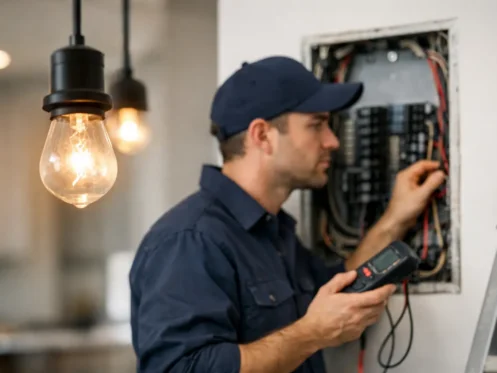
A flickering light can be as simple as a loose bulb, but it can also be the first visible warning of a failing connection behind a wall, in a panel, or at the electrical service. Electrical repair for flickering lights starts with identifying the pattern, not guessing at the fix. A light that flickers only on one fixture needs a different solution than lights that dim throughout the house when an appliance starts.
For homeowners and property managers, the goal is not merely to stop an annoying flicker. It is to make sure the electrical system is operating safely and reliably. Loose or damaged wiring can create heat at a connection point, damage equipment, and in serious cases increase fire risk.
When Flickering Lights Are a Safety Concern
Some light flickering is relatively minor. For example, an LED bulb may flicker because it is not compatible with an older dimmer switch. A bulb that has worked loose in a ceiling fixture can also lose contact intermittently. Those are usually straightforward repairs once power is turned off and the correct parts are installed.
The concern rises when the flickering affects multiple fixtures, appears suddenly, or happens alongside other electrical symptoms. Pay close attention if lights brighten and dim unpredictably, especially if the change is noticeable in more than one room. This may point to a loose neutral connection, an overloaded circuit, a panel issue, or a problem with the incoming electrical service.
Call a licensed electrician promptly if you notice any of the following:
- Lights flicker, dim, or surge when the HVAC system, microwave, washer, or another large appliance turns on.
- Multiple lights in different areas of the home flicker at the same time.
- Switches or outlets feel warm, make a buzzing sound, spark, or smell burnt.
- A breaker trips repeatedly, or lights flicker before a breaker trips.
- Lights become unusually bright in one room while dimming in another.
A burning odor, smoke, visible sparking, or a hot electrical panel calls for immediate action. Turn off power at the main breaker only if it is safe to do so, keep people away from the area, and arrange emergency electrical service. Do not remove a panel cover or attempt to tighten wiring yourself.
Common Causes of Flickering Lights
A loose bulb or fixture connection
A single flickering light is often limited to the bulb, lamp holder, switch, or fixture wiring. Vibration from a ceiling fan, normal movement over time, or a poorly seated bulb can interrupt the electrical contact. LED bulbs may also expose issues that went unnoticed with incandescent bulbs because LEDs respond quickly to small changes in voltage.
A qualified electrician can inspect the fixture, its wiring connections, and the switch that controls it. If the fixture is aging, damaged, or poorly installed, replacement may be the safer and more cost-effective choice than repeated repairs.
Incompatible LED bulbs and dimmers
Not every LED bulb works properly with every dimmer. Older dimmers were designed for incandescent lamps and may not supply the consistent low-level current an LED driver requires. The result can be flickering, buzzing, limited dimming range, or lights that fail to turn fully off.
The repair may be as simple as installing compatible dimmable LED bulbs. In other cases, the dimmer should be replaced with one rated for LED lighting. This is a good example of why the lowest-cost fix is not always the lasting fix. Replacing bulbs without checking dimmer compatibility may only postpone the problem.
Loose connections in a switch, outlet, or junction box
Electrical connections expand and contract slightly as they heat and cool. Over many years, connections can loosen, particularly in older homes or fixtures that see frequent use. A loose wire may cause an intermittent flicker long before it fails completely.
These problems should be diagnosed carefully. An electrician can test the circuit, inspect accessible connections, and repair the source rather than replacing random components. Properly secured connections help prevent arcing, which occurs when electricity jumps across a gap and creates intense heat.
An overloaded or failing circuit
Flickering that occurs when a major appliance starts can mean the circuit is carrying too much demand or experiencing a voltage drop. Kitchens, laundry rooms, garages, workshops, and older additions are common places to find circuits that no longer match how a property is used.
Sometimes the solution is a dedicated circuit for a high-demand appliance. Other times, the issue involves deteriorated wiring, an undersized circuit, or a breaker that needs evaluation. A professional diagnosis matters because adding a larger breaker to an undersized wire is unsafe and does not solve the underlying problem.
Panel, neutral, or service issues
If lights flicker across the home, the concern may be outside the individual branch circuit. A loose neutral in the electrical panel or service equipment can cause uneven voltage, leading some lights to brighten while others dim. This condition can damage electronics and appliances, and it should be treated as urgent.
An electrician can determine whether the problem is within the home’s wiring and panel or may involve the utility connection. If the utility is responsible for part of the repair, clear diagnosis helps ensure the right party addresses it without delay.
How a Professional Electrical Repair for Flickering Lights Works
A thorough service call should begin with questions about what you see and when it happens. Does the flicker occur with one fixture or throughout the building? Does it happen when the heat pump turns on? Is it limited to a dimmer-controlled light? These details narrow the search and reduce unnecessary repairs.
The electrician then evaluates the affected fixtures, switches, circuit loading, breaker condition, and accessible connections. Depending on the symptoms, testing may extend to the electrical panel and service equipment. The point is to locate the actual source of the voltage interruption or fluctuation.
Once the cause is clear, you should receive a straightforward explanation of the recommended repair and its cost before work proceeds. The right repair could involve a new LED-compatible dimmer, a fixture connection repair, replacement of damaged wiring, a dedicated circuit, or an electrical panel upgrade. It depends on the condition of the system and the scope of the issue.
For older homes in Mebane and the surrounding area, flickering can reveal electrical systems that were installed for a much lighter load than modern households use. Today’s homes may be running larger HVAC equipment, home offices, smart devices, garage tools, EV chargers, and more kitchen appliances than the original wiring was designed to support. An inspection can clarify whether a focused repair is enough or whether a planned upgrade would provide better long-term safety.
What You Can Check Safely Before Calling
There are a few observations that help speed up diagnosis. Note which lights flicker, whether they share a switch or circuit, and what appliances are running at the time. If the issue is limited to one lamp, try a known-good bulb of the correct type and wattage. For a dimmable fixture, check whether the bulb is labeled dimmable and whether the flicker changes at certain dimmer settings.
Avoid opening electrical boxes, removing switches, reaching into fixtures, or resetting a breaker again and again. Those steps can hide a developing failure without correcting it. If a bulb is hot, a fixture is damaged, or there is any sign of overheating, leave it off until it can be inspected.
Choose a Repair That Addresses the Cause
Flickering lights are easy to dismiss because they often come and go. That is exactly why they deserve attention. Intermittent electrical problems can remain quiet for weeks before becoming more obvious, more expensive, or less safe.
Mebane Electrical Services approaches flickering-light repairs with careful diagnostics, clear communication, and permanent solutions whenever possible. If a light in your home or business has started behaving differently, treat that change as useful information and have a licensed electrician determine what your electrical system is telling you.