
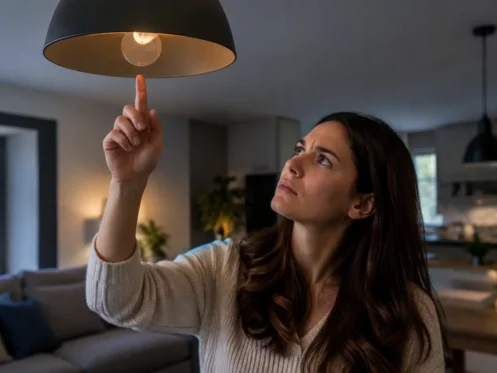
A hallway light briefly fades when the air conditioner starts. The kitchen pendant lamps dip when the microwave runs. One small flicker may not mean a serious problem, but repeated or widespread dimming deserves attention. Understanding why lights dim helps you separate a simple fixture issue from an electrical concern that needs a licensed electrician.
Electrical systems should deliver steady power to lights, appliances, and modern equipment. When the voltage reaching a light changes, its brightness changes with it. The cause may be as minor as an aging bulb or as significant as a loose connection, overloaded circuit, or service issue. The pattern matters.
Why Lights Dim in a Home or Business
Lights can dim because a large appliance briefly draws a heavy amount of power when it starts. Air conditioners, heat pumps, refrigerators, sump pumps, well pumps, microwaves, and electric dryers can all create a momentary dip. A very slight, occasional change in brightness may be normal, especially in an older home.
It becomes less normal when the dimming is dramatic, lasts more than a moment, happens frequently, or affects lights throughout the building. Those details help identify whether the issue is limited to one fixture, one circuit, the electrical panel, or the utility service feeding the property.
A loose bulb, lamp, switch, or fixture connection
If only one light is dim, flickering, or cutting out, start with the most local possibilities. A bulb may be loose in its socket, nearing the end of its life, or incompatible with a dimmer switch. LED bulbs are especially sensitive to dimmers that were designed for older incandescent lamps.
A failing switch, loose wire connection, damaged socket, or aging fixture can cause the same symptom. Do not take apart a fixture or switch box to investigate if you are not qualified to do so. Loose electrical connections can generate heat and may become a fire hazard.
An overloaded circuit
A circuit has a limited capacity. When too many lights, appliances, or plug-in devices operate on the same circuit, voltage can drop and lights may dim when equipment turns on. This is common in older homes where modern electrical use has outgrown the original circuit layout.
For example, a home office, space heater, television, printer, and portable air conditioner may all be sharing outlets on one circuit. In a commercial setting, added equipment, display lighting, or break-room appliances can create similar strain. Dimming paired with warm outlets, buzzing, tripped breakers, or a burning odor requires prompt professional attention.
A problem at the electrical panel
The panel distributes power throughout the property. Loose breaker connections, worn components, corrosion, undersized equipment, or an outdated panel can contribute to unstable lighting. Panel concerns are not a do-it-yourself repair. Even with a breaker switched off, parts of a panel may remain energized.
Panel problems may be more likely in a home that has added central air conditioning, a hot tub, workshop equipment, an EV charger, or other high-demand loads without an electrical upgrade. An electrician can calculate the property’s electrical demand, inspect the panel, and recommend a repair or upgrade based on the actual condition of the system.
A loose neutral connection
A loose neutral is one of the more serious explanations for lights that dim or brighten unpredictably. In a typical home electrical system, the neutral conductor helps balance voltage across circuits. When that connection is loose or damaged, some lights may become unusually dim while others get brighter.
This is not a wait-and-see situation. Sudden changes in brightness across multiple rooms can damage electronics and may indicate a dangerous connection at the panel, meter equipment, service connection, or utility side of the system. Turn off sensitive electronics if it is safe to do so, avoid using major appliances, and arrange for qualified electrical service right away. If the issue appears to involve the incoming utility service, the electrician may advise contacting the power company as well.
Utility supply or neighborhood issues
Sometimes the issue is outside the building. Storm damage, an overloaded transformer, damaged service lines, or utility equipment problems can cause lights to dim across a neighborhood. Look for clues: Are nearby homes affected? Do lights change brightness during high winds or rain? Is the issue happening throughout the property rather than on one circuit?
Even when a utility issue is possible, it is wise to have the property’s electrical system checked if the symptoms persist. A professional inspection can help rule out hazards on your side of the meter before the problem is attributed to the power company.
When Dimming Lights Are a Safety Concern
A light that dims once when a refrigerator compressor starts is different from a home where lights flicker daily and breakers trip regularly. Call a licensed electrician promptly if you notice lights that brighten and dim significantly, repeated flickering in several rooms, buzzing at a panel or outlet, hot switches or receptacles, scorch marks, a burning smell, or shocks from appliances and fixtures.
Also pay attention to changes following renovation work, storm damage, a generator connection, or the installation of a new major appliance. These events can reveal existing weaknesses or place new demands on an electrical system. A thorough diagnosis should identify the source of the problem rather than simply replacing the light bulb or resetting a breaker.
If you see smoke, sparks, arcing, or signs of an active electrical fire, move away from the area, call 911, and do not attempt to handle the equipment yourself.
What You Can Safely Check First
Homeowners can make a few basic observations before scheduling service. Note whether the issue affects one fixture, one room, or the entire property. Notice what was running when the lights dimmed, how long the change lasted, and whether a breaker tripped. This information gives an electrician a useful starting point.
You can also try a new compatible bulb in a single affected fixture and make sure the bulb is properly seated after turning the fixture off. If a dimmer is involved, confirm that the bulb is labeled dimmable and that the dimmer is designed for LED lighting. Stop there. Do not remove panel covers, tighten wiring, replace breakers, or continue using outlets that feel hot or show damage.
Permanent Repairs Start With Proper Diagnosis
The correct repair depends on the cause. It may involve replacing a failing fixture, correcting a loose connection, installing a dedicated circuit, repairing panel components, upgrading electrical service, or coordinating with the utility provider. There is no one-size-fits-all answer, and that is why diagnosis matters.
For homeowners and property managers in Mebane and the surrounding area, Mebane Electrical Services can inspect dimming-light concerns, explain what is happening in plain language, and provide upfront recommendations for a lasting repair. The goal is not to treat a symptom temporarily. It is to make sure the electrical system is operating safely and reliably for the way the property is used now.
When lights dim repeatedly, trust the pattern rather than hoping it goes away. A timely inspection can protect your appliances, reduce frustration, and address a small electrical issue before it becomes a larger safety concern.