
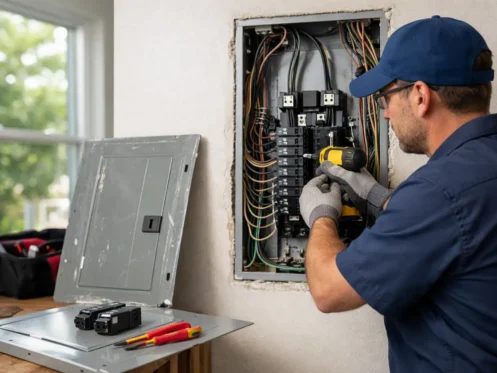
A breaker that trips once after a crowded holiday meal may not mean much. A panel that trips repeatedly, feels warm, makes buzzing sounds, or cannot support a new appliance is different. Electrical panel replacement in Mebane, NC, is often the right next step when a property’s electrical system can no longer safely keep up with daily demand.
Your electrical panel is the control center for the building. It receives power from the utility, distributes it to individual circuits, and shuts off power when a fault or overload occurs. When it is properly sized, installed, and maintained, most homeowners rarely think about it. When it is outdated, damaged, or overloaded, it deserves prompt professional attention.
When Is Electrical Panel Replacement Necessary?
Age alone does not automatically require a new panel. Some older panels remain serviceable when they are in good condition and sized correctly for the property. The decision comes down to the panel’s condition, capacity, safety features, and the electrical demands placed on it.
Frequent breaker trips are one of the most common warning signs. A breaker is designed to trip when a circuit is overloaded or a fault is detected. Resetting it occasionally may be normal, but repeated trips should not be treated as an inconvenience to work around. The cause could be a single overloaded circuit, a damaged appliance, deteriorated wiring, or a panel that no longer supports the property’s needs.
Other warning signs call for a qualified electrical inspection: flickering or dimming lights, breakers that will not reset, a burning odor near the panel, corrosion, visible damage, crackling or buzzing, heat around breakers, or rust from water intrusion. If you notice smoke, sparking, or a burning smell, turn off power if it is safe to do so and call for emergency electrical service right away.
A panel upgrade may also be needed when you are planning an improvement rather than responding to a failure. Adding an EV charger, generator connection, electric range, workshop equipment, hot tub, HVAC equipment, or a home addition can substantially change the electrical load. The question is not simply whether there is an open breaker space. The service and panel must have adequate capacity to supply the added equipment safely.
Panel Replacement vs. Panel Upgrade
These terms are often used together, but they can mean different things. A panel replacement generally means installing a new panel in place of an existing one because the old equipment is damaged, obsolete, unsafe, or unreliable. The electrical service size may stay the same if it continues to meet the building’s load requirements.
A panel upgrade usually means increasing capacity as part of the project. For example, a property may move from an older, smaller service to a larger service that can support modern appliances and future additions. The work may involve the meter equipment, service conductors, grounding and bonding components, utility coordination, permits, and inspection requirements in addition to the new panel.
The right approach depends on the home or commercial space. A small home with a functioning service may only need a replacement panel and circuit corrections. A renovated home with electric heating, a new EV charger, and plans for backup power may need a more extensive service upgrade. A proper load calculation and on-site evaluation provide the answer without pushing unnecessary work.
What a Professional Panel Replacement Involves
Electrical panel work is not a do-it-yourself project. The equipment carries high voltage, and errors can create fire, shock, equipment damage, and code compliance issues. A licensed electrician starts by diagnosing the condition of the existing system rather than assuming the panel is the only concern.
That evaluation typically includes the panel’s rating and condition, breaker performance, circuit layout, wiring condition, grounding and bonding, signs of overheating, and the property’s current and expected load. For an upgrade, the electrician calculates demand from major appliances and equipment to determine the appropriate service size.
Once the scope is clear, the project is planned around permits, utility requirements when applicable, and a safe power shutdown. The old equipment is removed, the new panel is installed and labeled, and circuits are connected, tested, and organized. Grounding and bonding are verified because these systems help reduce shock hazards and allow protective devices to operate correctly during a fault.
A well-executed replacement also makes the panel easier to use in the future. Clear labeling helps you identify which breaker controls each area or appliance. Adequate space for approved future circuits can reduce complications when you later add a charger, generator interlock, finished room, or new equipment.
Why Capacity Matters for Modern Mebane Properties
Homes and businesses in the Mebane area range from established properties with original electrical equipment to newer construction with growing technology demands. Even a house that has served a family well for decades may be operating differently now. More electronics, larger HVAC systems, induction cooking, electric dryers, garage tools, charging equipment, and backup power options all add demand.
An EV charger is a good example. Level 2 charging generally requires a dedicated 240-volt circuit and may run for hours at a time. It is a valuable convenience, but it should be added only after confirming the existing electrical service and panel can safely support it. The same principle applies to portable generator interlock connections and standby generator installations. Backup power should be integrated through properly installed equipment, not improvised extension-cord setups.
For commercial property owners, panel capacity affects daily operations as well as safety. New office equipment, refrigeration, lighting changes, tenant improvements, and specialized machinery can alter electrical needs. A panel evaluation before the work begins helps prevent costly interruptions later.
What Affects the Cost of a Panel Replacement?
There is no responsible one-price answer without seeing the property. The panel itself is only one part of the job. Pricing depends on whether the project is a like-for-like replacement or a service upgrade, the amperage needed, the number and condition of circuits, the accessibility of the equipment, required repairs to wiring or grounding, permit requirements, and whether utility coordination is necessary.
A lower initial estimate is not always the lower-cost solution if it leaves known deficiencies unaddressed. On the other hand, not every project requires a complete service upgrade. Transparent pricing begins with a clear explanation of what is required for safety, what is recommended for reliability or future plans, and why each part of the scope matters.
Before approving work, ask what problem the replacement is solving, whether the service capacity has been calculated, what permits and inspections apply, how long power will be off, and whether the new panel leaves room for future circuits. Straight answers help you make a confident decision.
Choosing an Electrician for Electrical Panel Replacement in Mebane, NC
Panel replacement affects the safety and reliability of the entire property, so experience and communication matter. Look for a licensed, bonded, and insured electrical contractor that performs a thorough assessment, explains findings in plain language, provides upfront pricing, and handles the work according to applicable codes and inspection requirements.
It also helps to choose a local team that can respond when the issue is urgent and remain available for future electrical needs. A new panel is often part of a larger plan, whether that includes rewiring, new lighting, a generator connection, added outlets, or EV charging. Working with an electrician who understands the whole system helps avoid patchwork repairs.
Mebane Electrical Services approaches panel projects with the same goal as every repair: identify the real problem, complete the work safely, and provide a lasting result. Homeowners, property managers, Realtors, and business owners deserve to know what is happening in their electrical system before work begins and what to expect when it is complete.
If your panel is showing warning signs or your property is ready for an electrical upgrade, do not wait for repeated trips or equipment damage to make the decision for you. A professional evaluation can clarify your options, protect the people who use the property, and give your electrical system room to support what comes next.