
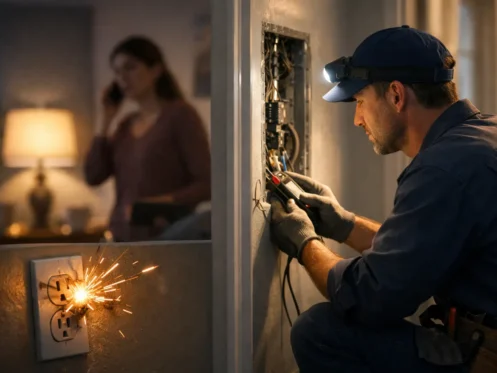
A burning smell near an outlet, a panel that feels hot, or power that repeatedly cuts out is not a problem to put on tomorrow’s list. An emergency electrician can help identify the source, make the area safe, and determine whether the issue needs an immediate repair, a replacement part, or a larger electrical upgrade.
Electrical emergencies can be unsettling because the cause is not always visible. A breaker may trip for a simple reason, such as an overloaded circuit, but it can also be reacting to damaged wiring, a failing appliance, moisture, or a problem inside the electrical panel. Knowing what to do in the first few minutes can protect your family, tenants, employees, and property.
What Counts as an Electrical Emergency?
An electrical emergency is any condition that creates an immediate risk of shock, fire, serious property damage, or loss of power to essential equipment. It does not have to involve flames or a complete blackout. Often, the warning signs are smaller: a receptacle that sparks, lights that flicker across several rooms, or a breaker that will not stay reset.
Call for urgent electrical service when you notice a burning odor, smoke, visible sparks, buzzing from an outlet or panel, a hot switch plate, or scorch marks around electrical equipment. Water near electrical wiring, ceiling fixtures, or a panel also deserves prompt attention, especially after a plumbing leak, storm damage, or flooding.
A sudden loss of power can be an emergency when it affects only your home or business while nearby properties still have electricity. It may point to a failed main breaker, damaged service equipment, or another issue requiring professional diagnosis. If the outage affects the entire neighborhood, contact your utility provider first. Do not attempt to inspect outdoor utility lines, the meter, or service connections yourself.
What to Do Before an Emergency Electrician Arrives
The right response depends on what you see and hear. Your first priority is always personal safety, not troubleshooting. If there is smoke, fire, active sparking, or a person has received an electrical shock, move to a safe location and call 911. Do not use water on an electrical fire.
If it is safe to do so, turn off power at the breaker serving the affected area. If you cannot identify the correct breaker, or if the panel is hot, buzzing, wet, or showing signs of damage, leave it alone. Avoid touching outlets, switches, cords, appliances, or panels with wet hands or while standing on a wet floor.
A few practical steps can also help limit damage while you wait:
- Unplug appliances from the affected outlet only if there is no heat, smoke, water, or visible damage.
- Keep children, pets, tenants, and customers away from the area.
- If an appliance is smoking or overheating, do not continue using it or plug it into another outlet.
- Make a note of what happened just before the issue began, such as using a space heater, running an appliance, or experiencing a storm.
Do not repeatedly reset a tripped breaker. A breaker is designed to interrupt power when it detects a condition that could damage wiring or equipment. Resetting it over and over can allow a problem to worsen and makes diagnosis harder once the electrician arrives.
Emergency Electrician Problems That Need a Real Diagnosis
Some electrical issues appear straightforward but have more than one possible cause. For example, a breaker that trips when you use a microwave may indicate an overloaded circuit. It could also point to a loose connection, deteriorated wiring, a weak breaker, or an appliance fault. The repair should match the actual cause, not just restore power for the moment.
Burning Odors, Heat, and Discolored Outlets
Heat is one of the clearest warning signs in a residential or commercial electrical system. A warm outlet after a high-demand appliance has been running is still not something to ignore, and a hot outlet, switch, cord, or breaker requires prompt service. Discoloration and melted plastic suggest arcing or poor connections that can create fire risk inside the wall.
An experienced electrician will inspect the device, wiring connections, circuit load, and protective equipment. Replacing an outlet without correcting an overloaded or damaged circuit may only delay the next failure.
Flickering Lights and Partial Power Loss
A single flickering bulb may simply need replacement. But lights that dim or brighten when major appliances start, flickering throughout multiple rooms, or partial power loss can indicate a loose connection or service issue. These problems can affect sensitive electronics and may become more serious if left unresolved.
The trade-off is that not every flicker requires an emergency visit. A brief flicker during a utility event is different from ongoing changes inside one property. If the issue is persistent, affects several circuits, or comes with buzzing, heat, or breaker problems, it should be checked promptly.
Water Damage Around Electrical Equipment
Water and electricity are a dangerous combination, even when everything appears dry on the surface. Moisture can remain inside a wall, outlet box, fixture, panel, or conduit after a roof leak, burst pipe, or flooding event. Power should remain off to the affected equipment until a qualified electrician can assess it.
This is especially important for properties with finished basements, outdoor outlets, crawl spaces, older wiring, or electrical equipment near plumbing. Drying the room does not confirm that the electrical system is safe to use.
A Panel That Trips, Buzzes, or Will Not Reset
Your electrical panel is the safety center of the system. A breaker that trips once after a clear overload may not be an emergency, but repeated tripping is a message worth taking seriously. Buzzing, crackling, overheating, corrosion, or a burning smell at the panel calls for immediate professional attention.
Older homes in the Mebane area may also have panels that were not designed for the electrical demands of modern living. EV chargers, heat pumps, workshop equipment, larger kitchen appliances, and backup power connections can all place new demands on an older electrical service. An emergency repair may solve the immediate issue, while a panel upgrade or circuit addition may be the lasting solution.
Why Temporary Fixes Create Bigger Problems
It is tempting to use an extension cord, swap in a larger breaker, or avoid the outlet that seems troublesome. Those workarounds can hide the warning sign without solving the hazard. In particular, installing a larger breaker than the wiring is rated for can prevent the circuit from shutting down when it should, increasing the chance of overheated wiring.
A permanent repair starts with careful diagnostics. The electrician should identify the failed component, examine the circuit and connections around it, verify safe operation after the repair, and explain what was found in clear terms. Upfront communication matters in an emergency because you need to understand both the immediate safety concern and any recommended follow-up work.
For landlords, property managers, and business owners, documentation and a clear explanation are equally valuable. A quick repair can restore operations, but recurring issues should be tracked and addressed before they turn into tenant complaints, equipment loss, or an after-hours emergency.
Choosing an Emergency Electrician You Can Trust
Urgency should not mean guessing about who is qualified to work on your property. Look for a licensed, bonded, and insured electrical contractor that can respond promptly, communicate clearly, and diagnose the cause before proposing a repair. A professional should respect your home or business, explain safety concerns without unnecessary jargon, and provide transparent pricing whenever the situation allows.
Experience matters most when the problem is not obvious. A loose neutral, a damaged feeder, an overloaded circuit, or failing panel equipment can produce similar symptoms. Proper testing helps prevent a repair that looks successful at first but leaves the original hazard in place.
Mebane Electrical Services approaches urgent calls with the same goal as scheduled repairs: make the property safe and permanently resolve the problem whenever possible. Whether the issue is a damaged outlet, a panel concern, storm-related electrical damage, or a critical power failure, clear communication and careful workmanship help bring order back to a stressful situation.
If something in your electrical system smells hot, sparks, repeatedly trips, or behaves differently than it normally does, trust that warning sign. Shut down power when it is safe, keep people clear of the area, and get qualified help before a manageable repair becomes a much larger problem.