
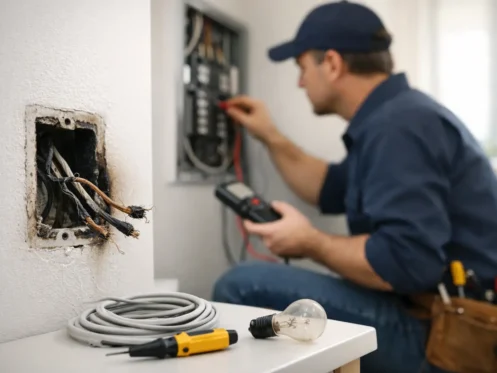
A breaker that trips once after a hair dryer and space heater run together may simply be doing its job. A breaker that trips repeatedly, outlets that feel warm, or lights that dim when the HVAC starts are different. These are common signs your house needs rewiring, and they deserve prompt attention rather than another temporary workaround.
Electrical wiring is mostly hidden behind walls, so homeowners often do not see a problem until an outlet fails or a breaker will not reset. A professional inspection can identify whether the issue is one damaged circuit, an aging panel, an overloaded electrical system, or wiring that has reached the end of its safe service life.
10 Signs Your House Needs Rewiring
1. Breakers trip or fuses blow frequently
Circuit breakers are designed to shut power off when a circuit is overloaded or a fault develops. An occasional trip can happen, especially in a kitchen, bathroom, garage, or older room with limited outlets. Frequent tripping is not normal.
Do not keep resetting a breaker that trips again. The cause may be too many appliances on one circuit, a failing appliance, damaged wiring, or a loose connection. In homes with an old fuse box, blown fuses or the use of oversized fuses are especially serious warning signs. A licensed electrician should diagnose the source before power is restored to that circuit.
2. Lights flicker, dim, or surge
Lights may flicker briefly during a major storm or when a large motor starts. But lights that regularly dim when the refrigerator, washer, HVAC system, or microwave turns on can point to an overloaded circuit or a connection problem.
Pay close attention if lights become unusually bright, then dim. That can indicate a loose neutral connection, which may allow unstable voltage to reach equipment in your home. Turn off sensitive electronics if possible and arrange an electrical inspection promptly.
3. Outlets or switches feel warm
A wall outlet, switch plate, plug, or extension cord should not feel hot. Warmth can mean resistance is building at a loose, worn, or overloaded connection. That resistance creates heat, and heat can damage insulation and increase fire risk.
Also look for discoloration, scorch marks, melted plastic, buzzing, crackling, or a burning odor. Stop using the outlet or switch immediately. If there is smoke, visible sparking, or an active burning smell, turn off power at the breaker only if it is safe to do so and seek emergency electrical service.
4. You rely on extension cords and power strips every day
Extension cords are intended for temporary use, not as permanent wiring. If a room depends on power strips to run lamps, chargers, office equipment, TVs, heaters, or kitchen appliances, it may not have enough properly placed outlets for how the space is used.
More outlets alone may solve the problem in some homes. In others, the existing circuit cannot safely support the added demand and needs to be upgraded. This is common in older houses that were built before home offices, large televisions, electric tools, and today’s kitchen appliances were standard.
5. Your outlets are loose, damaged, or outdated
Plugs that fall out of receptacles are more than an inconvenience. Loose outlets can create poor connections and heat buildup. Cracked cover plates, broken receptacles, and outlets that spark when a plug is inserted should also be repaired without delay.
Two-prong outlets are another reason to schedule an evaluation. They may indicate older ungrounded wiring. Grounding provides a safer path for fault current and helps protect people and equipment. Replacing a two-prong receptacle with a three-prong outlet is not always a simple cosmetic update – the circuit must be evaluated so the upgrade is safe and code-appropriate.
6. You notice buzzing, crackling, or unusual odors
Electricity should operate quietly. A faint hum from certain dimmers or transformers can be normal, but buzzing from outlets, switches, panels, or walls is not something to ignore. Crackling sounds may signal arcing, where electricity jumps across a gap caused by a loose or deteriorating connection.
A fishy, burning, or acrid smell near an electrical component can also mean overheating insulation or plastic. Do not try to locate the issue by removing outlet covers or opening the electrical panel. Shut off the affected circuit when safe and call a qualified electrician.
7. The home still has original wiring from decades ago
Age alone does not prove a house needs complete rewiring. Well-maintained wiring can remain serviceable, while a newer home may have a damaged circuit that needs repair. Still, homes with original electrical systems from the 1940s through 1970s often deserve a careful inspection, particularly after renovations or a change in ownership.
Some older properties may contain knob-and-tube wiring, aluminum branch wiring, cloth-insulated conductors, or panels with limited capacity. Each situation requires a different solution. An electrician may recommend targeted repairs, new dedicated circuits, a panel upgrade, or partial or whole-home rewiring based on the wiring condition and the home’s current electrical demands.
8. You have an undersized or outdated electrical panel
Your panel is the control center for your electrical system. If it is full, has no room for additional circuits, uses fuses, shows corrosion, or has breakers that will not stay reset, it may no longer support the household safely.
Panel concerns often come up when homeowners add a hot tub, workshop equipment, central air, an EV charger, a generator connection, or a finished basement. A panel replacement does not automatically mean every wire in the home needs replacement. However, if an inspection finds aging or unsafe branch wiring, addressing both issues together can provide a more lasting result.
9. GFCI protection is missing where water is present
Ground-fault circuit interrupter outlets are designed to shut off power quickly when electricity follows an unintended path, including through water or a person. Modern safety standards call for this protection in areas such as bathrooms, kitchens, garages, laundry areas, crawl spaces, unfinished basements, and exterior locations.
If your home has ordinary outlets near sinks, outdoors, or in a garage, it is worth having them evaluated. Missing GFCI protection does not always mean a full rewire is necessary, but it does mean the electrical system may need safety updates.
10. Renovations reveal damaged, altered, or poorly repaired wiring
A remodel can uncover issues that have been hidden for years: splices outside approved electrical boxes, nicked wires, insulation damaged by rodents, overloaded circuits, or do-it-yourself additions that were never properly installed. These conditions are especially common when a home has changed hands several times.
Do not cover questionable wiring back up with drywall and hope for the best. Repairs are easier and often less disruptive while walls are open. A thorough inspection before a kitchen remodel, addition, or major appliance upgrade can prevent costly surprises later.
Rewiring Does Not Always Mean Tearing Apart Every Wall
Many homeowners hear the word “rewiring” and picture a full renovation. Sometimes whole-home rewiring is the safest and most practical answer, especially when old wiring is widespread or significantly deteriorated. But it depends on what an inspection finds.
A permanent repair may involve replacing one damaged circuit, installing dedicated circuits for high-demand appliances, correcting unsafe connections, adding GFCI or AFCI protection, upgrading the panel, or rewiring only the areas being renovated. The right scope should be based on testing and clear findings, not assumptions.
For older homes in Mebane and the surrounding Durham-Burlington-Chapel Hill area, an experienced electrician can explain what is urgent, what can be planned, and what investment will best improve safety and reliability. Clear communication matters here. You should understand the condition of your system, the work being recommended, and the expected cost before work begins.
When to Call for an Electrical Inspection
Schedule an inspection when you notice recurring breaker trips, warm outlets, flickering lights, buzzing, burning odors, or visible damage. It is also wise before buying an older home, listing a property, beginning a remodel, or installing an EV charger or backup generator connection.
Electrical problems rarely improve on their own. Addressing them early gives you more options, helps avoid emergency repairs, and protects the people and property that matter most. If something in your home does not look, sound, or smell right electrically, trust that instinct and have it checked by a licensed professional.