
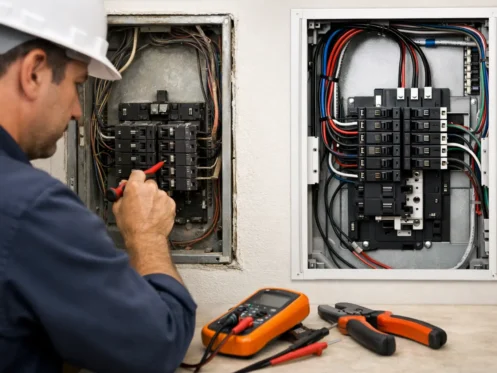
A breaker that trips every time the microwave and air conditioner run together is more than an everyday inconvenience. It may be your electrical panel telling you that the system no longer fits the way your property uses power. This panel replacement comparison explains what separates a like-for-like replacement from a capacity upgrade, a subpanel addition, and a complete service upgrade so you can make a safe, practical decision.
For homeowners and property owners, the right answer is rarely based on the panel box alone. The condition of the wiring, the age of the service, current electrical demand, and your plans for the property all affect the scope of work. A licensed electrician should diagnose the full system before recommending a solution.
When a Panel Replacement Is the Right Choice
An electrical panel replacement generally means removing an existing panel and installing a new one with properly sized, modern circuit breakers. It is often the correct choice when the existing panel is damaged, corroded, overloaded, obsolete, or associated with known safety concerns.
Some older panels may have limited breaker space, loose connections, signs of overheating, or breakers that do not operate reliably. Rust around the panel, a burning odor, warm breakers, buzzing sounds, flickering lights, and repeated tripping all deserve prompt professional attention. A panel with a recalled or problematic design may need replacement even if it appears to be working normally.
A replacement is also sensible when your existing service capacity is adequate but the panel itself is not. For example, a home may have sufficient 200-amp service coming from the utility, yet the interior panel has no room for additional circuits or has deteriorated over time. In that case, replacing the panel can improve safety and create space without changing the service equipment outside.
Panel Replacement Comparison: Four Common Options
The phrase “panel upgrade” can mean several different projects. Comparing the options helps prevent two common problems: paying for work you do not need or installing a solution that will be outgrown quickly.
1. Like-for-Like Panel Replacement
A like-for-like replacement updates the panel while maintaining roughly the same service capacity. If your property has a safe, adequate 150-amp or 200-amp service and the incoming conductors are correctly sized, this can be the most direct solution.
This option is often appropriate after panel damage, when breakers are failing, or when the existing panel has reached the end of its service life. It can provide modern breaker protection and additional circuit spaces, depending on the panel selected.
The trade-off is that it does not increase how much electricity the property can safely receive from the utility. If you plan to add an EV charger, hot tub, electric range, heat pump, workshop equipment, or generator connection, the existing amperage still needs to be evaluated carefully.
2. Higher-Capacity Service and Panel Upgrade
A service upgrade increases the electrical capacity supplied to the building. This work may involve a new meter base, service entrance equipment, larger conductors, grounding updates, a new main panel, and utility coordination.
This is often the better choice for older homes with 60-amp or 100-amp service that are being modernized. It may also be necessary when a load calculation shows that existing capacity cannot safely support planned additions. A 200-amp service is common in many modern homes, but it is not automatically the right answer for every property. Larger homes or buildings with substantial electric loads may need more capacity, while some homes can safely remain at a lower rating after professional evaluation.
A full service upgrade costs more and typically involves more planning than a panel-only replacement. However, it can prevent expensive repeat work if you know an electric vehicle, all-electric appliances, or major renovation is close ahead.
3. Main Panel Replacement With a New Subpanel
A subpanel is a smaller distribution panel fed from the main panel. It does not create more utility service capacity, but it can distribute circuits more effectively and add room where it is needed.
This option works well for a detached garage, workshop, addition, basement finish-out, or area that needs several new circuits. A subpanel can shorten wiring runs and keep new work organized without crowding the main panel.
The key limitation is capacity. If the main service is already overloaded, adding a subpanel does not fix the underlying issue. The feeder to the subpanel and the total connected load must be correctly calculated and installed. A subpanel is a useful expansion tool, not a substitute for an undersized service upgrade.
4. Repairing the Existing Panel
Not every panel issue requires full replacement. A qualified electrician may be able to resolve a specific problem by replacing a damaged breaker, correcting a loose connection, repairing an improperly installed circuit, or addressing a grounding issue.
Repair can be the most cost-effective path when the panel is modern, in good condition, and has sufficient capacity and available space. It becomes less attractive when several components are failing, corrosion is present, the panel is obsolete, or the property’s electrical needs are growing. Repeated repairs on an aging panel can eventually cost more than a planned replacement.
What Determines the Cost and Scope
Electrical panel pricing cannot be accurately reduced to a single number because the visible panel is only one part of the job. A transparent estimate should explain what work is included and why it is needed.
Labor and material costs are affected by the panel amperage, number of circuits, condition of existing wiring, location of the panel, permit requirements, grounding and bonding updates, and whether the utility service must be modified. Older homes sometimes reveal issues that were hidden behind the panel cover, such as undersized conductors, damaged insulation, improper neutral connections, or circuits that need to be brought up to current safety standards.
Permitting and inspection are also part of a properly completed replacement or upgrade. They help confirm that the work meets applicable electrical codes and that the installation is safe for the property. Cutting corners on panel work can create fire and shock risks, complicate an insurance claim, or cause issues during a future sale.
How to Compare Recommendations From Electricians
When comparing estimates, look beyond the headline price. One proposal may cover only a panel swap, while another includes code-required grounding work, new breakers, labeling, permits, inspection coordination, and corrections to unsafe conditions found during diagnosis.
Ask whether the recommendation is based on a load calculation and whether it accounts for planned changes to the property. If you are considering an EV charger, generator interlock, electric water heater, heat pump, or renovation, say so before the estimate is prepared. Planning those needs now may influence the panel size, number of spaces, and service capacity that make sense.
You should also receive clear answers about whether a utility shutdown is needed, how long power may be off, whether drywall or exterior equipment could be affected, and what is included in the final price. A dependable electrical contractor will explain the work in plain language rather than pressure you into the largest option available.
Signs You Should Schedule an Evaluation Soon
Certain symptoms should not wait for a future remodel. Call for professional electrical service if breakers trip frequently, lights dim when major appliances start, the panel feels hot, you hear crackling or buzzing, or you see scorch marks, corrosion, or water intrusion. A breaker that will not reset, an outlet that sparks, or a burning smell should be treated as an urgent safety concern.
Properties built decades ago also deserve attention when electrical demand has changed significantly. A home that once powered a few lights and basic appliances may now support computers, entertainment systems, larger HVAC equipment, kitchen upgrades, chargers, and home office equipment. The electrical system should keep pace with the way the property is actually used.
For homeowners and businesses in Mebane and the surrounding area, Mebane Electrical Services can evaluate your panel, explain the options clearly, and recommend work based on safety and long-term needs rather than a one-size-fits-all answer. The best time to address an aging or undersized panel is before it becomes the reason your power, comfort, or safety is interrupted.