
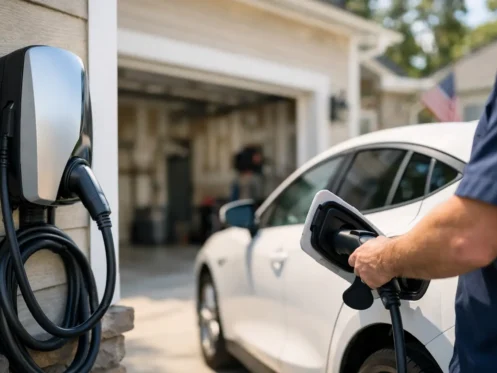
A new EV can make the daily commute easier, but charging from a standard wall outlet is rarely the best long-term plan. For homeowners considering ev charger installation mebane nc, the right setup starts with more than choosing a charger from a box. It starts with confirming that your home’s electrical system can safely support the added load.
A professionally installed Level 2 charger can give you dependable overnight charging, better charging speed, and a cleaner setup than an extension cord or frequently used portable cord. Just as important, it helps protect your home from overloaded circuits, overheating connections, and equipment problems that can develop when charging is treated as an afterthought.
Why a Level 2 Charger Is Usually the Practical Choice
Most electric vehicles include a portable charging cord that can plug into a regular 120-volt outlet. This is called Level 1 charging. It can work for drivers with short daily mileage and plenty of time between trips, but it may add only a few miles of driving range per hour.
A Level 2 charger uses a dedicated 240-volt circuit, similar to the type of power used for larger appliances. Depending on the vehicle, charger, and circuit capacity, it can add substantially more range per hour and often fully recharge a vehicle overnight. For busy families, commuters, and property owners planning for long-term EV use, that convenience matters.
The best choice still depends on how you drive. A Level 1 setup may be adequate for a plug-in hybrid or a second vehicle with limited mileage. A Level 2 installation is generally the better fit when the vehicle is driven every day, more than one driver needs access to charging, or you want the flexibility to recharge quickly before an unexpected trip.
What an EV Charger Installation in Mebane, NC Requires
Every home is different. The age of the electrical system, the size of the main panel, the distance to the garage or driveway, and the charger’s electrical rating all affect the scope of work. A qualified electrician should inspect these details before recommending a circuit size, equipment location, or price.
Electrical Panel Capacity Comes First
An EV charger is a continuous electrical load. That means it can operate at a high demand level for hours at a time, unlike many household devices that cycle on and off. Your electrical panel must have enough available capacity to support it safely along with your HVAC system, water heater, kitchen appliances, lighting, and other regular loads.
A full panel does not always mean a replacement is required. In some cases, there may be a safe way to reorganize circuits or install approved equipment to make room. In other homes, especially older properties with 100-amp service or panels already supporting major electric appliances, a panel upgrade may be the responsible solution.
This is not a place to guess based on empty breaker spaces alone. Open spaces do not automatically mean the service has enough capacity. A proper load calculation and inspection provide the answer.
Charger Location Affects Cost and Convenience
Many chargers are installed inside a garage, near the vehicle’s parking position. Others need to be mounted outdoors beside a driveway or carport. The easiest location is usually close to the electrical panel, but the most convenient location is where the charging cable reaches the vehicle without becoming a trip hazard or stretching across a walkway.
Longer wire runs can increase installation cost, particularly when wiring must travel through finished walls, crawl spaces, attics, underground conduit, or masonry. Outdoor installations require equipment rated for the environment and careful attention to weather protection. A good installation balances appearance, access, protection from damage, and future usability.
It is also worth thinking ahead. If you may add a second EV in a few years, mention it during the estimate. Planning the wiring pathway, panel capacity, or charger location now can reduce disruption later.
Permits and Code Compliance Protect the Property
Electrical permits and inspections may be required for EV charging equipment, depending on the project and local jurisdiction. These steps are not unnecessary red tape. They help verify that the circuit, breaker, wire size, grounding, disconnect requirements, and equipment installation meet current safety standards.
Improperly installed EV circuits can create real risks. Undersized conductors, loose terminals, incorrect breaker sizing, damaged receptacles, and equipment not intended for continuous charging can overheat over time. The charger may appear to work at first while an unsafe condition develops behind the wall or inside the panel.
Licensed electrical work gives homeowners clearer accountability and helps protect the value of the property. It can also be important when selling a home, completing insurance documentation, or managing a rental property.
Choosing Between a Hardwired Charger and a Plug-In Charger
Both options can be appropriate when installed correctly. A hardwired charger is permanently connected to its dedicated circuit. It can offer a clean appearance, eliminates the receptacle connection, and may support higher charging output depending on the equipment and electrical design.
A plug-in charger connects to a properly installed 240-volt receptacle. This can make it easier to replace or take the charger with you later, but the receptacle must be rated for the intended use and installed to match the charger’s requirements. It should never be treated like a casual appliance outlet.
The charger itself should be listed by a recognized testing laboratory and matched to your vehicle and charging goals. Features such as scheduling, Wi-Fi controls, energy monitoring, and load management can be useful, but the safest charger is one supported by a correctly designed circuit and professional installation.
Common Questions Homeowners Ask
Can I install an EV charger on an older electrical panel?
Possibly. Older homes in Mebane and nearby communities vary widely in service capacity and wiring condition. Some can support a dedicated charger circuit with no major changes. Others need panel repairs, a service upgrade, or additional electrical work before charging equipment can be installed safely. An inspection is the only reliable way to know.
Can I use my dryer outlet for EV charging?
It is not a dependable long-term solution. Dryer circuits and receptacles may not match the charger’s requirements, and frequent plugging and unplugging can wear connections. A dedicated EV circuit is designed around the charger’s continuous load and avoids competing with another major appliance.
How long does installation take?
A straightforward garage installation may be completed in a single visit once the equipment and permit requirements are in place. Projects involving a panel upgrade, a long underground run, repairs to existing wiring, or service changes can take longer. Clear evaluation before work begins helps avoid surprises and keeps the project moving efficiently.
Is outdoor charging safe?
Yes, when the charger and installation materials are rated for outdoor use and installed correctly. The location should protect the equipment from physical damage and allow the cable to reach the vehicle safely. Weatherproofing, proper mounting, and correct wiring methods are essential.
A Safer Way to Prepare for Home Charging
Before purchasing a charger, gather a few practical details: your EV model, expected daily mileage, where you park, whether you want indoor or outdoor charging, and any plans for another electric vehicle. Then have the electrical panel and proposed charging location evaluated by a licensed professional.
Mebane Electrical Services approaches EV charging projects with the same focus used for panel upgrades, repairs, and safety inspections: identify the real electrical requirements, explain the options clearly, and complete work that is built to last. You should know what is being installed, why it is needed, and what the project will cost before work begins.
A home charger should make owning an EV simpler, not add uncertainty to your electrical system. With the right circuit, properly selected equipment, and a safe installation, you can come home, plug in, and be ready for the road when morning arrives.