
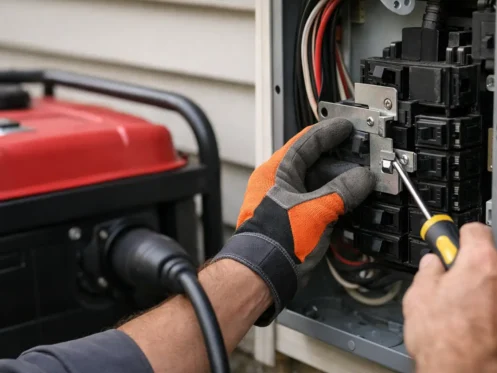
When a storm cuts power, a portable generator can keep the refrigerator cold, the sump pump running, and a few essential lights on. But portable generator interlock installation is not simply a matter of adding an inlet box and plugging in a generator. It is a safety system designed to prevent utility power and generator power from feeding a home at the same time.
That protection matters to your family, your appliances, and utility crews working to restore power. A properly installed interlock gives homeowners a practical backup-power option without the cost and scope of a whole-home standby generator. It also requires the right panel, the right equipment, and licensed electrical work completed to current requirements.
What a Generator Interlock Does
A generator interlock is a mechanical device installed at the electrical panel. It works with a dedicated generator breaker to make sure the main utility breaker and generator breaker cannot both be turned on at once.
During normal operation, your home receives electricity from the utility. When an outage occurs, you turn off the main breaker, move the interlock into position, and then turn on the generator breaker after connecting and starting the generator outside. The panel is then supplied by the portable generator, allowing you to power selected circuits.
The key word is selected. Most portable generators cannot safely carry every electrical load in a house. An interlock does not increase a generator’s capacity. Instead, it gives you controlled access to circuits you choose and helps prevent dangerous backfeeding.
Backfeeding occurs when generator power flows backward through the electrical system and out onto utility lines. This can seriously endanger lineworkers and damage equipment when utility power returns. Running extension cords is sometimes appropriate for a few temporary loads, but connecting a generator to a home’s wiring without an approved transfer method is never a safe substitute for an interlock or transfer switch.
Is Your Electrical Panel Suitable for an Interlock?
Not every panel can accept an interlock kit. The kit must be listed and designed for the specific panel manufacturer and model. A universal-looking part, an improvised bracket, or a modified panel cover is not an acceptable solution.
Before recommending portable generator interlock installation, an electrician should inspect the panel’s condition, available breaker space, service rating, grounding and bonding, and the location of the main breaker. Older panels, damaged equipment, panels with overcrowded wiring, or certain obsolete brands may need repair or replacement before a safe connection can be installed.
Your planned generator also affects the design. A small inverter generator may be ideal for a refrigerator, internet equipment, lights, and a gas furnace blower. A larger portable unit may support more circuits, but high-demand equipment can quickly exceed its output. Central air conditioning, electric ranges, electric water heaters, dryers, hot tubs, and well pumps often require careful load planning. Some equipment may need to remain off during generator operation.
An experienced electrician will ask what you want to keep running during an outage rather than assume that every circuit should be powered. That conversation prevents unpleasant surprises when the power goes out.
What a Professional Installation Typically Includes
A safe interlock connection is a coordinated installation, not a single part. The exact scope depends on the panel, generator size, and local requirements, but it commonly includes these components:
- A compatible, listed interlock kit for the existing electrical panel
- A correctly sized generator backfeed breaker
- A weather-rated power inlet box installed in a practical exterior location
- Properly sized wiring and a generator cord matched to the inlet and generator
- Panel labeling and operating instructions for safe outage use
The inlet box is especially important. It provides a fixed connection point outside the home so the generator can remain outdoors, away from doors, windows, vents, and attached garages. Portable generators produce carbon monoxide. They must never be operated indoors, in a garage, under a carport, or close enough for exhaust to enter the building.
A professional will also verify that the breaker arrangement allows the interlock to function exactly as intended. The equipment must physically block simultaneous operation of the utility main and generator breaker. If that sequence can be bypassed, the installation has failed its primary safety purpose.
Interlock vs. Transfer Switch: Which Is Right for You?
An interlock and a transfer switch both separate utility power from generator power. The better choice depends on how you want to use backup power and how much control you need.
An interlock generally uses your existing electrical panel. It can provide access to multiple circuits, provided you manage the total load and turn off nonessential breakers. It is often a cost-effective fit for homeowners who are comfortable following a clear operating procedure during an outage.
A transfer switch typically moves a predetermined group of circuits to generator power. This can make operation more straightforward because essential loads are selected in advance. It may be the better option for homeowners who want a dedicated emergency circuit setup, or for properties where panel layout or electrical conditions do not support a compatible interlock.
Neither option is automatically better in every home. The right recommendation starts with the panel, the generator, your priority loads, and your comfort level operating the system. A thorough assessment should explain the trade-offs and pricing before work begins.
Why This Is Not a DIY Electrical Project
Portable generators are familiar equipment, which can make a home connection seem simple. The electrical risks are not simple. Incorrect breaker sizing, improper wire selection, an incompatible interlock, poor grounding, missing labeling, or a generator connection made without a utility disconnect can create shock, fire, equipment-damage, and backfeed hazards.
There are also permit and inspection considerations. Requirements vary by jurisdiction, and an experienced local electrician can determine what applies to your property and complete the work accordingly. Proper documentation and inspection can be particularly valuable when selling a home, managing a rental property, or making an insurance claim after a major loss.
A licensed electrician does more than install hardware. They diagnose whether the existing system is ready, identify issues that could compromise the work, and make sure the finished connection operates as a complete safety system. That is the difference between a temporary-looking setup and a dependable backup-power plan.
Operating Your Generator Safely After Installation
Even a correctly installed interlock requires safe operation. Review the procedure before storm season, when you have time to ask questions and test the system under calm conditions. Keep the generator manual, approved cord, fuel supply, and flashlight in a known location.
When an outage occurs, start by turning off large or unnecessary loads inside the panel. Move the main breaker and interlock according to the instructions provided for your installation, connect the generator outdoors, start it, and then energize the generator breaker. Add loads gradually, beginning with essentials.
Pay attention to the generator’s capacity. If it bogs down, trips a breaker, or shows overload warnings, reduce the load immediately. Turn off the generator breaker before shutting the generator down or disconnecting the cord. When utility power returns, reverse the approved sequence so the home is safely returned to utility service.
Carbon monoxide alarms should be installed and working on every level of the home, especially near sleeping areas. Maintain the generator as the manufacturer directs, use fresh fuel handled safely, and never refuel a hot generator.
Plan Before the Next Outage
The best time to arrange a portable generator connection is before weather alerts fill the schedule. A planned evaluation allows time to inspect your panel, choose priority circuits, place the inlet box thoughtfully, and address any underlying electrical concerns without the pressure of an active outage.
For homeowners in Mebane and nearby communities, Mebane Electrical Services can assess whether an interlock or transfer switch is the right fit and provide clear, upfront guidance on the work required. Backup power should feel reassuring when the lights go out, not like another electrical risk to manage.