
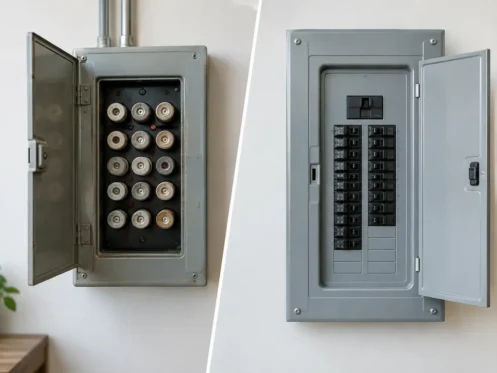
A fuse box vs breaker box question often comes up during a home sale, an insurance review, or the first time power goes out after plugging in a new appliance. The answer is not simply that one is old and one is new. Both systems are designed to stop dangerous electrical overloads, but they work differently, support different levels of electrical demand, and can tell an experienced electrician a great deal about your home’s wiring.
For many homes in Mebane and across the Durham-Burlington area, the bigger question is whether the existing electrical system safely supports the way the property is used now. EV chargers, electric ranges, heat pumps, home offices, and backup generators can place demands on a system that was installed decades ago.
Fuse Box vs Breaker Box: The Basic Difference
A fuse box protects electrical circuits with fuses. Inside each fuse is a thin metal element that melts when too much current flows through it. Once it melts, the circuit is off. The fuse has done its job, but it must be replaced before power can be restored.
A breaker box, more accurately called an electrical panel, uses circuit breakers instead. A breaker detects an overload or fault and trips to the off position. In many cases, the issue can be corrected and the breaker reset. Unlike a fuse, the breaker is intended for repeated use.
Neither system is meant to be a nuisance. A blown fuse or tripped breaker is a warning that a circuit is carrying more electricity than it can safely handle, or that there may be a wiring or appliance problem. Replacing a fuse or resetting a breaker without understanding why it opened can leave the actual hazard in place.
Are Fuse Boxes Unsafe?
A fuse box is not automatically unsafe just because it is older. A properly installed, correctly sized fuse system can provide overload protection. Some older homes still have fuse panels that have been maintained carefully and serve a limited electrical load without immediate trouble.
The concern is that fuse boxes are easier to misuse. If a fuse blows repeatedly, someone may install a larger fuse to stop the interruptions. That is called overfusing, and it can be dangerous. The wiring may be rated for 15 amps, for example, while a 20- or 30-amp fuse allows the wire to overheat before the fuse opens. Heat inside walls can damage insulation and create a fire risk.
Older plug-fuse panels may have tamper-resistant Type S adapters, which help prevent the wrong fuse size from being installed. Even then, the panel’s age, condition, capacity, grounding, wiring methods, and available circuits all need to be considered.
A breaker panel can also have safety concerns. Age alone does not make a breaker panel safe, and some older panel brands or models may require closer evaluation. Corrosion, overheating, loose connections, water intrusion, damaged breakers, double-tapped wiring, and an overloaded panel all deserve professional attention.
Why Breaker Panels Fit Modern Homes Better
Most current electrical installations use breaker panels because they are practical, flexible, and better suited to modern electrical needs. Resettable breakers make routine troubleshooting easier, while panel designs can accommodate dedicated circuits for major equipment.
A modern panel can also be configured to use safety devices that older fuse systems often lack. These may include ground-fault circuit interrupter protection, commonly called GFCI protection, in areas such as bathrooms, kitchens, garages, and outdoor locations. Arc-fault circuit interrupter protection, or AFCI protection, can detect certain dangerous arcing conditions in household wiring.
That does not mean every older home must be brought up to every current code requirement overnight. Electrical code requirements can depend on the scope of work, the home’s existing conditions, and local enforcement. A licensed electrician can explain what is required for a particular repair, panel replacement, or renovation without pushing unnecessary work.
Breaker panels also make expansions more manageable. A new EV charger, generator interlock connection, hot tub, addition, or kitchen remodel may require dedicated circuits and sufficient panel capacity. If the panel is full or undersized, adding another circuit safely may not be possible without an upgrade.
Signs Your Fuse Box May Need Professional Attention
A fuse box deserves a prompt evaluation if fuses blow repeatedly, lights dim when appliances start, outlets feel warm, or you smell burning near the panel. Other warning signs include rust, water damage, exposed wiring, missing panel covers, buzzing sounds, or fuses that are larger than the circuits they protect.
It is also wise to schedule an inspection before buying an older home or beginning a major renovation. A Realtor, buyer, or property manager may know a home has a fuse box but not know whether it has adequate grounding, sufficient service capacity, or prior alterations that need correction.
Do not remove the panel cover or attempt to replace a fuse with a higher-rated one. The service equipment can contain energized components even when individual circuits are off. A qualified electrician can test the system, identify the circuit sizes, inspect for overheating, and recommend repairs based on the actual condition of the home.
Panel Replacement vs. Electrical Service Upgrade
These terms are often used interchangeably, but they are not always the same project.
A panel replacement means replacing the panel and breakers while keeping the existing electrical service capacity, when that capacity is adequate and the rest of the equipment is in acceptable condition. This can be the right solution when an aging panel has corrosion, damage, no room for circuits, or reliability concerns.
An electrical service upgrade increases the amount of power available to the home. It may involve a new meter base, service entrance wiring, panel, grounding improvements, utility coordination, and permits. A service upgrade may be needed when the existing service cannot safely support a planned EV charger, electric HVAC equipment, generator connection, or other significant load.
The right recommendation depends on a load calculation and a complete inspection. A 200-amp panel does not automatically mean a home has a 200-amp service, and a larger panel does not solve problems caused by deteriorated branch wiring. Good electrical work begins with thorough diagnostics, not assumptions.
What Does an Upgrade Cost?
Costs vary because every electrical system is different. Replacing a straightforward panel is very different from upgrading service equipment, correcting grounding issues, relocating a panel, repairing damaged wiring, or bringing a converted garage or addition up to code.
The lowest estimate is not always the best value if it leaves behind the issue that caused the concern. A clear estimate should explain the scope of work, the equipment being replaced, permit needs when applicable, and whether additional repairs may be required after inspection. Transparent communication matters, especially when work affects the safety of the entire property.
For a home with a fuse box that is functioning properly, an electrician may recommend monitoring it, making targeted repairs, or planning a future replacement rather than treating the situation as an emergency. For a panel with overheating, overfusing, damage, or insufficient capacity, waiting can create more risk and make a future project more complicated.
When to Call an Electrician
Call for professional service if a fuse blows or breaker trips more than once, especially if the same circuit keeps causing trouble. Also call promptly for sparks, smoke, burning odors, hot electrical equipment, shock sensations, or signs of water near the panel. Those are not conditions to watch and wait on.
If you are planning an EV charger, standby or portable generator connection, home addition, appliance upgrade, or major remodel, schedule an evaluation before purchasing equipment. This gives you a realistic picture of what the electrical system can support and avoids costly surprises after the project has started.
A fuse box does not always mean an emergency, but it is a reason to understand your home’s electrical system. The safest next step is a professional inspection that identifies what is working, what needs correction, and what will give your property dependable power for the years ahead.