
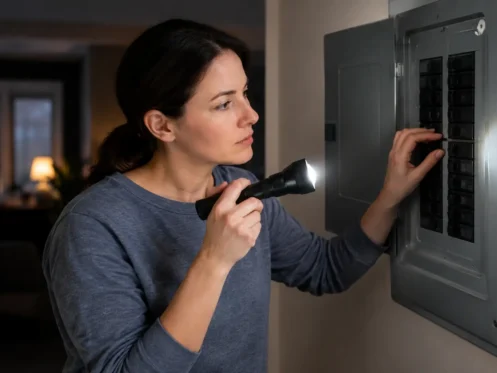
A sudden loss of power can be as simple as a tripped breaker or as serious as damaged service equipment, an overloaded circuit, or a wiring failure. Emergency power loss repair begins with knowing which situation you are facing and taking a few safe steps before anyone touches electrical equipment. The goal is not merely to get the lights back on. It is to identify the cause, protect people and property, and prevent the same failure from happening again.
First, Determine How Widespread the Outage Is
Start outside your property if conditions are safe. Check whether nearby homes, streetlights, or neighboring businesses are also without power. If the outage affects the surrounding area, the problem is likely on the utility side. Report it to your power provider, avoid downed lines, and wait for utility restoration updates.
If nearby properties have electricity but yours does not, the issue may be within your electrical system. A partial outage is another useful clue. For example, if the kitchen outlets are dead but the rest of the house has power, a tripped breaker, GFCI outlet, failed connection, or overloaded branch circuit may be involved. If half the building is out, lights are flickering throughout the property, or large appliances will not run properly, the issue could involve the main panel, service conductors, meter equipment, or a lost utility leg.
Do not assume that an outage is harmless because some power remains. Partial power can create abnormal voltage conditions that damage sensitive electronics, motors, and appliances.
When Emergency Power Loss Repair Is Needed Right Away
Some electrical problems should not wait for normal business hours. Call for professional emergency power loss repair when the outage is paired with a burning odor, smoke, sparks, buzzing, a hot electrical panel, visible damage, or repeated breaker trips. These symptoms can point to an active electrical fault, and resetting equipment without a diagnosis can make the situation worse.
Treat the following as urgent:
- A panel, outlet, switch, or electrical cord feels hot or shows discoloration.
- You smell burning plastic, rubber, or insulation near electrical equipment.
- A breaker will not remain on after one careful reset.
- Water has entered the panel, wiring, outlets, or electrical equipment.
- A tree limb, vehicle, or storm damage has affected the service line or meter area.
- Your building has partial power, dimming or brightening lights, or appliances behaving erratically.
If there is smoke, fire, or immediate danger, move everyone away from the area and call 911. Never spray water on an electrical fire. If a power line is down, stay well clear, keep others away, and report it to the utility. Even a line that appears inactive can be energized.
Safe Checks You Can Make Without Taking Risks
For a simple, isolated outage, homeowners and business operators can perform a few basic checks. Keep hands dry, stand on a dry surface, and use a flashlight instead of candles. Candles introduce an avoidable fire risk when people are moving through a dark property.
First, look at the electrical panel without removing its cover. Check for a breaker that has moved to the middle or off position. To reset it, move the breaker fully to off and then back to on one time. If it trips immediately, leave it off. That circuit needs professional troubleshooting.
Next, check GFCI outlets, commonly found in kitchens, bathrooms, garages, laundry rooms, unfinished basements, and exterior locations. One tripped GFCI can disable several downstream outlets. Press the reset button only if the area is dry and there are no signs of damage. If it will not reset, or it trips again, stop there.
Unplug nonessential devices from the affected circuit before resetting a breaker or GFCI. A portable heater, damaged appliance, overloaded power strip, or failing motor can be the trigger. Still, a successful reset does not prove the problem is solved. If the issue returns, an electrician should locate the underlying fault rather than leave you guessing.
Why Breakers Trip and Power Fails
Circuit breakers are safety devices. They shut off power when they detect an overload, short circuit, or ground fault. That means the breaker is often responding correctly, even when the interruption is inconvenient.
An overload happens when too many electrical loads run on one circuit. Space heaters, hair dryers, microwaves, air fryers, and portable air conditioners can quickly exceed what a standard circuit is designed to carry. The fix may be as straightforward as redistributing equipment, but frequently used high-demand appliances may require a dedicated circuit.
Short circuits and ground faults are more serious. They can be caused by damaged cords, loose connections, worn outlets, moisture, rodents, aging wiring, or equipment failure. Older homes may also have panels, breakers, or wiring systems that are no longer suitable for current electrical demands. Adding a larger breaker is not a safe solution. The wire, outlet, panel capacity, and connected equipment all need to be evaluated as a system.
Protect Your Property While the Power Is Out
A few practical steps can reduce losses during a longer outage. Keep refrigerator and freezer doors closed as much as possible. Unplug sensitive electronics and major appliances if power is fluctuating or if you suspect a service problem. When power returns after a utility outage, surges can occur, particularly during storm restoration.
For commercial properties, consider the effect on refrigeration, point-of-sale systems, security equipment, network hardware, and emergency lighting. Property managers should document the time of the outage, affected areas, visible conditions, and any equipment alarms. That information helps an electrician diagnose the issue efficiently and helps owners make informed decisions about repairs.
Avoid running a portable generator in a garage, carport, enclosed porch, or near open windows. Carbon monoxide can build up quickly and cannot be seen or smelled. A generator should operate outdoors, away from doors, windows, and vents, with properly rated cords used only for approved loads. Never connect a portable generator directly to a wall outlet. This dangerous practice can backfeed utility lines and create severe shock and fire hazards.
Permanent Repairs Matter More Than a Quick Reset
The best repair depends on what caused the power loss. A loose connection may require repair at an outlet, junction box, meter base, or panel. Water-damaged components may need replacement after the source of moisture is addressed. An overloaded electrical system may need new dedicated circuits, a panel upgrade, or a service upgrade to safely support modern appliances, HVAC equipment, EV charging, or business equipment.
A qualified electrician should test the affected circuit, inspect related connections, verify grounding and protection devices, and explain what failed. This process takes more time than resetting a breaker, but it is how a temporary interruption becomes a lasting solution. Clear explanations and upfront pricing also matter during an emergency, when it is easy to feel pressured into a decision.
For homes and businesses in Mebane and the surrounding area, Mebane Electrical Services provides responsive troubleshooting and repairs focused on safety, communication, and permanent results. Whether the problem is a single dead circuit, a damaged panel component, or a more complex service issue, experienced diagnosis protects your property better than repeated resets.
When the power goes out, trust the warning signs, keep everyone clear of suspected hazards, and get qualified help when the cause is not obvious. A careful response now can prevent damaged equipment, disrupted operations, and a much more serious electrical problem later.