
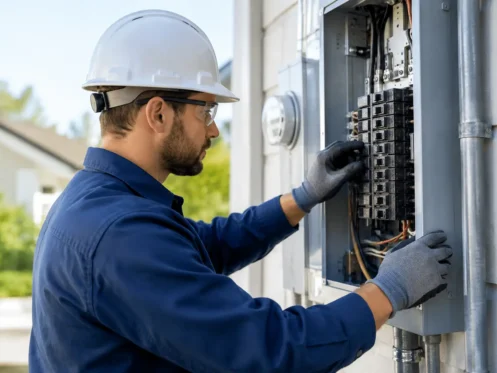
A tripping breaker is not always a small inconvenience. If it happens when the microwave, HVAC system, dryer, or a new EV charger is running, it may be your home telling you that its electrical service is no longer sized for the way you live. This service upgrade guide explains what an electrical service upgrade actually means, when it may be needed, and how to make a safe, informed decision.
An upgrade is a significant investment, but it is also one that can improve day-to-day reliability, support future projects, and address safety concerns in older homes. The right scope depends on your property, your existing equipment, and the electrical load you plan to add.
What an Electrical Service Upgrade Includes
Homeowners often use the terms “panel upgrade” and “service upgrade” interchangeably, but they are not always the same job. Replacing an outdated breaker panel may improve the condition and organization of the distribution equipment inside the home. A true service upgrade increases the amount of power available from the utility connection to the home.
Depending on the property, the work can involve a new meter base, service entrance conductors, main disconnect, grounding and bonding components, and a properly sized electrical panel. The utility may also need to coordinate work at the service connection. A licensed electrician evaluates the full path of power into your home rather than replacing one visible component and hoping that solves the problem.
For many older properties, moving from a 100-amp service to a 200-amp service provides room for modern household demand. That does not mean every home needs 200 amps. A professional load calculation and on-site inspection determine what capacity is appropriate.
Signs Your Home May Need More Electrical Capacity
Some warning signs call for immediate attention, while others are planning signals that you should schedule an evaluation before beginning a major project. Frequent breaker trips, lights that dim when large appliances start, warm outlets or panel components, buzzing sounds, and a burning odor should never be ignored. If you notice heat, smoke, sparking, or a burning smell, turn off power to the affected area if it is safe to do so and call for emergency electrical service.
Other signs may not feel urgent, but they still matter. Your home may be a good candidate for an upgrade if the panel has no available breaker spaces, uses outdated or damaged equipment, or has been expanded with additions and renovations over the years. A panel crowded with tandem breakers or extension cords doing the work of permanent outlets can also indicate that the electrical system has not kept up.
New equipment is often what brings capacity limitations to light. Common examples include:
- EV charger installation
- Central air conditioning or a heat pump
- An electric range, dryer, or water heater
- A hot tub, workshop equipment, or pool equipment
- A standby generator or portable generator interlock connection
Adding one of these does not automatically require a service upgrade. For example, some EV chargers can be configured for lower amperage, and load management equipment may be appropriate in certain situations. But reducing the demand of a new device is not a substitute for correcting an unsafe or overloaded electrical system.
Why Panel Space Is Not the Whole Story
An empty breaker space does not guarantee that your home has enough electrical capacity. Likewise, a full panel does not always mean the service itself is undersized. The panel, main breaker rating, service conductors, meter equipment, existing loads, and planned loads all need to be considered together.
This is why a proper assessment begins with diagnostics, not assumptions. An electrician reviews major appliances, heating and cooling equipment, installed circuits, and the electrical demands you expect in the future. The goal is to determine whether the issue is available panel space, service capacity, aging equipment, a specific circuit problem, or a combination of factors.
A careful diagnosis protects you from paying for more work than you need. It also prevents a short-term repair from becoming a recurring problem after you add new equipment next year.
What to Expect During a Service Upgrade
Every home is different, but the process should be clear before work begins. First, the electrician inspects the existing service and panel, identifies code and safety concerns, and calculates the anticipated electrical load. You should receive a straightforward explanation of the recommended work, the reason for it, and the expected cost.
Permitting is a normal part of a service upgrade. Local requirements, utility coordination, and inspection schedules can affect the project timeline. Your electrician should handle the technical planning and explain when a temporary power interruption will be necessary. In many cases, the main portion of the work is completed within a day, but utility scheduling or unexpected conditions can add time.
During the outage, plan for refrigeration, internet equipment, medical devices, garage access, and any other items your household relies on. If a resident depends on powered medical equipment, discuss that need before scheduling so the work can be planned responsibly.
Once the upgrade is complete, the system should be labeled clearly and tested. A well-organized panel makes it easier to identify circuits during a future repair or emergency. It also gives your electrician a safer, cleaner starting point for later additions such as lighting, a generator connection, or EV charging.
Safety Issues That Should Not Wait
Service upgrades are often planned projects, but certain conditions require prompt professional attention. Older fuse boxes, damaged meter equipment, corroded service components, water intrusion near the panel, and panels that show signs of overheating can create hazards that go beyond capacity concerns.
Do not remove a panel cover or attempt to tighten service connections yourself. Even when a main breaker is off, portions of service equipment can remain energized. Electrical work at this level requires proper training, permits, and coordination to protect your household and the utility workers serving the area.
If you are buying, selling, or renovating an older home, an electrical safety inspection can identify concerns before they disrupt the transaction or construction schedule. For property managers and business owners, early evaluation can also help prevent tenant complaints, downtime, and emergency repairs.
How to Plan a Service Upgrade That Lasts
The best time to evaluate capacity is before you are forced into a rushed decision. Consider how you expect to use the property over the next five to ten years. Are you replacing gas appliances with electric models? Adding a finished basement, accessory dwelling space, home office, workshop, or EV? Are you considering backup power as storm preparedness becomes a greater priority?
Share those plans during the estimate. An electrician can recommend an approach that supports the work you are doing now without overlooking likely future demand. Sometimes that means installing a larger panel with room for expansion. In other cases, it means correcting a specific issue and leaving the existing service in place because it is still appropriate.
Price matters, but scope matters just as much. A low estimate may leave out grounding improvements, permit fees, utility coordination, code-required updates, or repairs to damaged equipment discovered during the job. Ask what is included, what could change the price, and how the contractor will communicate if conditions behind the panel or meter are different than expected.
For homeowners in Mebane and the surrounding area, Mebane Electrical Services provides clear recommendations, upfront pricing, and licensed workmanship for panel and service upgrade projects. The focus is on permanent repairs and electrical improvements that fit your home, not a one-size-fits-all answer.
A service upgrade should give you more than a larger number on a breaker panel. It should give your household the confidence to use the equipment you depend on, add the technology you want, and know the electrical system behind your walls is prepared for the job.