
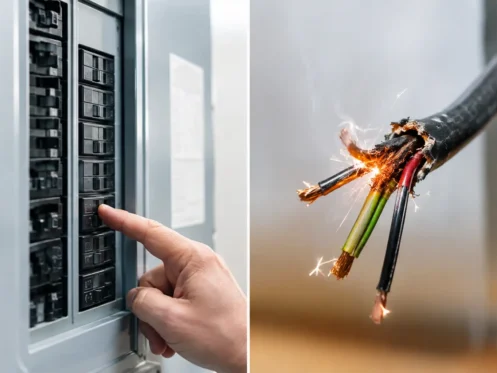
A breaker that trips once may be doing its job. A breaker that trips repeatedly is telling you something needs attention. Understanding arc fault versus ground fault protection helps you respond appropriately – without guessing, bypassing a safety device, or overlooking a developing electrical hazard.
Both devices are designed to reduce the risk of fire, shock, and damage. But they watch for very different types of trouble. One looks for dangerous sparking in wiring. The other looks for electricity taking an unintended path, often through water, equipment, or a person.
Arc Fault Versus Ground Fault: The Basic Difference
An arc-fault circuit interrupter, usually called an AFCI, is designed to detect electrical arcing. An arc occurs when electricity jumps across a gap or loose connection rather than flowing cleanly through the intended conductor. The resulting spark can create intense heat, sometimes inside a wall, outlet box, appliance cord, or electrical panel.
A ground-fault circuit interrupter, or GFCI, monitors whether the electricity leaving a circuit is returning as it should. If even a small amount of current leaks somewhere else, the device shuts off power quickly. That leakage may occur when moisture enters a receptacle, a damaged appliance sends current to its metal case, or a person becomes part of the path to ground.
Put simply, AFCI protection is primarily aimed at reducing fire risk from arcing. GFCI protection is primarily aimed at reducing shock risk from current leakage. Both can trip because a circuit has a real problem, but the likely source of that problem is different.
What an Arc Fault Breaker Detects
An AFCI breaker or receptacle recognizes electrical patterns associated with arcing. Those patterns can result from worn insulation, a loose terminal, a damaged extension cord, a nail or screw contacting wiring, or a failing connection inside an outlet or switch.
Not every spark is an emergency, and not every AFCI trip proves there is hidden wiring damage. Some motors and electronic equipment can create electrical noise that resembles an arc. Older appliances, treadmills, vacuum cleaners, power tools, and certain chargers may be involved. Still, repeated tripping should never be dismissed as an annoying breaker.
A licensed electrician can determine whether the issue is a branch-circuit wiring defect, a loose device connection, a damaged cord, an overloaded circuit, a failing appliance, or a breaker that needs replacement. The goal is not simply to restore power. It is to identify why the device reacted and permanently resolve the problem.
Where AFCI Protection Is Common
Modern residential electrical standards commonly require AFCI protection in living areas where people use cords, electronics, lamps, and portable equipment. Bedrooms were among the first locations to receive this protection, but requirements have expanded over time.
The exact requirements for a property depend on the age of the home, the scope of a renovation, the local code in effect when work is performed, and the circuit involved. A panel upgrade or remodel may create a need to evaluate whether AFCI protection should be added. An electrician can explain what applies to your specific project rather than relying on a one-size-fits-all answer.
What a Ground Fault Breaker or Outlet Detects
A GFCI compares the current on the hot conductor with the current returning on the neutral. Under normal conditions, those amounts match. When they do not, the device interprets the difference as electricity going somewhere it should not and disconnects power rapidly.
This is why GFCI protection is common near water and in areas with concrete floors or outdoor exposure. Kitchens, bathrooms, garages, crawl spaces, unfinished basements, laundry areas, exterior receptacles, and pool or spa equipment are frequent examples. The protection may be provided by a GFCI receptacle, a GFCI breaker in the panel, or an upstream device protecting additional outlets.
Moisture is a common trigger, but it is not the only possibility. A worn appliance cord, a damaged outdoor receptacle cover, a failing disposal, a refrigerator component, or a wiring issue can also create a ground fault. If a GFCI will not reset or trips again as soon as it resets, the circuit needs proper diagnosis.
Why GFCIs Sometimes Trip During Normal Use
A GFCI can trip when an appliance has a small amount of normal leakage that becomes excessive as the appliance ages or encounters moisture. Multiple appliances on the same protected circuit can also add up to enough leakage to cause a trip. This is particularly common in garages, kitchens, and outdoor circuits where several tools or devices may be in use.
The answer is not to replace a GFCI receptacle with a standard outlet or move a grounded appliance onto an unprotected circuit. Removing protection may stop the nuisance, but it also removes the safeguard. A thorough inspection can identify whether the appliance, receptacle, wiring, or circuit layout is the actual cause.
Can One Circuit Need Both Protections?
Yes. Many newer homes use dual-function breakers that provide both AFCI and GFCI protection. This approach is useful where a circuit is subject to both shock hazards and arcing hazards, such as certain kitchen, laundry, garage, or living-area applications.
A dual-function breaker is not automatically the right answer for every older home. Panel compatibility matters, as do circuit configuration, local requirements, the condition of existing wiring, and the reason a breaker is tripping. Installing a different breaker without correcting a damaged connection or failing appliance only delays the repair.
What to Do When a Safety Device Trips
Start by noticing what was running when power went out. A space heater, hair dryer, microwave, sump pump, refrigerator, power tool, or outdoor equipment may provide a useful clue. Turn off or unplug items on the affected circuit before attempting one reset.
If the breaker or GFCI resets and holds, reconnect equipment one item at a time. If it trips when a particular item is used, stop using that item until it can be checked or replaced. If the device trips with nothing connected, will not reset, feels warm, has discoloration, makes buzzing sounds, or is accompanied by a burning odor, leave it off and arrange professional service.
Do not repeatedly reset a breaker in hopes it will eventually stay on. Do not tape a breaker in the on position, replace it with a larger breaker, or remove GFCI protection to keep an outlet working. These shortcuts can turn a manageable electrical repair into a fire or shock hazard.
When the Problem May Be in the Panel or Wiring
A trip that affects a single appliance may point to that appliance. A trip that happens at random, after rain, when a light switch is used, or whenever multiple devices operate can indicate a broader circuit issue. Homes with older wiring, recent remodeling, rodent activity, water intrusion, or DIY electrical changes deserve especially careful evaluation.
Panel work also requires more than swapping parts. Breakers must match the panel manufacturer and be correctly sized for the conductors and circuit load. Neutral and ground connections, shared-neutral circuits, damaged insulation, and improper connections can all affect AFCI and GFCI performance. These are details that require safe testing and experienced judgment.
For homeowners and property managers in Mebane and nearby communities, Mebane Electrical Services can inspect the circuit, explain the findings clearly, and recommend a repair based on the actual cause. Whether the solution is a damaged receptacle, a failing breaker, a wiring repair, or a panel upgrade, clear communication and lasting results matter.
The Right Protection Should Not Be a Mystery
Arc-fault and ground-fault devices are not interchangeable, and a trip is not automatically a sign that the device is defective. They are safety tools responding to different risks. When one keeps shutting off power, treat it as useful information and have the circuit evaluated before a minor warning becomes a larger repair.