
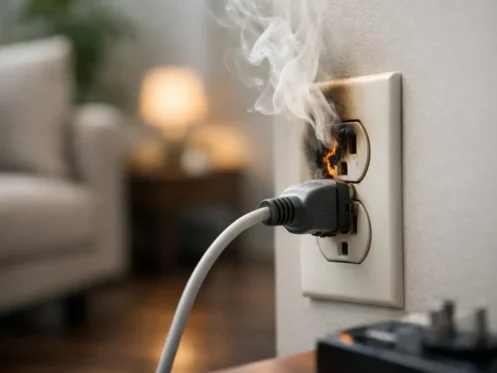
A burning odor near an outlet is not a smell to ignore or wait out. If you are asking what causes burning outlet smell, the answer is usually heat from a failing electrical connection, damaged component, overloaded circuit, or active arcing. Any of those conditions can damage wiring and create a fire risk if power continues flowing.
Treat the outlet as unsafe until it has been checked. Stop using it immediately, unplug devices only if you can do so without touching a hot, melted, or damaged receptacle, and turn off the appropriate breaker if you can identify it safely. If you see smoke, sparks, charring, or flames, leave the area and call 911. For a burning smell without an immediate emergency, schedule a licensed electrician as soon as possible.
What Causes a Burning Outlet Smell?
Electrical outlets should not smell hot, smoky, fishy, or like melting plastic. A brief odor may sometimes come from a new appliance warming up for the first time, but the smell should come from the appliance itself, not the wall outlet. When the odor is strongest at the receptacle, switch plate, plug, or wall surface, assume there is an electrical issue until a professional determines otherwise.
Loose wiring creates dangerous heat
A loose wire connection is one of the most common reasons an outlet begins to smell burned. Electricity must pass through secure connections at the receptacle terminals, wire splices, and circuit wiring. When a connection loosens, electrical resistance rises. That resistance produces heat, sometimes concentrated inside a small outlet box where it is not visible from the room.
Over time, repeated heating can discolor insulation, melt plastic parts of the outlet, and worsen the loose connection. A plug may feel unusually warm, the outlet may work only intermittently, or lights on the same circuit may flicker. These are warning signs, not minor inconveniences.
Overloaded outlets and circuits
Power strips, extension cords, space heaters, window air conditioners, hair tools, microwaves, and other high-demand equipment can overload an outlet or the circuit serving it. An outlet may be rated appropriately for normal use but still overheat when several power-hungry devices run at once.
The problem is not always a single outlet with too many plugs. Several rooms may share one circuit, especially in older homes. Running a portable heater in one room while kitchen appliances, a vacuum, or electronics operate elsewhere on the same circuit can create more demand than the wiring was designed to handle.
A breaker that trips occasionally should be investigated, not repeatedly reset. The breaker may be responding correctly to an overload, a short circuit, or arcing. Repeatedly forcing it back on can allow a developing issue to continue.
Worn or damaged receptacles
Outlets wear out. The internal contacts that grip a plug can weaken after years of use. A loose plug may shift inside the receptacle, creating poor contact and heat at the plug blades. Cracked faceplates, black marks, melted plastic, buzzing, or a receptacle that feels warm all point to a damaged device that needs replacement.
Damage can also result from a hard pull on a plugged-in cord, an impact from furniture, or a poorly installed outlet. A replacement outlet is not always a simple cosmetic repair. An electrician should also inspect the wiring and box behind it to make sure the damage did not extend beyond the receptacle itself.
Arcing inside the outlet or wall
Arcing occurs when electricity jumps across a gap rather than traveling through its intended connection. It can produce a sharp burning or fishy odor, crackling sounds, visible sparks, and rapid heat buildup. Loose wires, deteriorated insulation, damaged cords, and faulty outlet components can all lead to arcing.
Because arcing may happen behind the outlet cover or inside the wall, the absence of flames does not mean the situation is safe. This is one reason a burning odor deserves prompt attention. An electrician can test the circuit, inspect the outlet and connections, and determine whether the problem is isolated or part of a larger wiring concern.
Aging or improperly repaired wiring
Older homes may have wiring that no longer meets current electrical needs. Materials can become brittle, connections can corrode, and prior repairs may not have been completed to a safe standard. A burning smell after adding modern loads, such as an EV charger, portable heater, or new appliances, may reveal that the circuit does not have enough capacity.
Improper DIY repairs can create similar conditions in any age home. Common problems include undersized wiring, loose terminal screws, overloaded junction boxes, incorrect wire connections, or outlets installed without proper grounding. The visible outlet may be where you notice the smell, but the actual fault could be farther along the circuit.
Moisture, pests, and outside damage
Water and electricity are a dangerous combination. Moisture from a plumbing leak, condensation, flooding, or an exterior wall issue can corrode connections and create short circuits. Outlets in bathrooms, kitchens, garages, crawl spaces, and outdoor areas deserve particular attention when there has been water exposure.
Rodents can also chew wire insulation inside walls, attics, and crawl spaces. The damage may remain hidden until the compromised wiring heats up or begins arcing. If a burning smell is paired with signs of pests, water staining, or a recently damaged wall, tell the electrician. That context can speed up an accurate diagnosis.
What to Do When an Outlet Smells Like It Is Burning
Do not keep testing the outlet by plugging devices back in. Do not cover the smell with air freshener, paint over discoloration, or assume the issue is resolved because the odor fades. Electrical damage can be intermittent, especially after the circuit cools down.
First, move people and pets away from the area. If the outlet is hot, smoking, sparking, visibly melted, or making a crackling sound, avoid touching it. Turn off power at the electrical panel only if you can do so safely and know which breaker controls the outlet. If you are uncertain, leave it alone and call for help.
Next, note what was plugged in and what else was operating when you noticed the odor. That information helps identify whether the issue may involve an overloaded circuit, a defective appliance, or wiring inside the wall. If an appliance cord or plug is melted or discolored, do not use that appliance on another outlet until it has been evaluated.
When the Problem May Be the Appliance Instead
Sometimes the outlet is innocent. A failing appliance, charger, power strip, or extension cord can overheat at the plug and transfer heat to the receptacle. Check from a safe distance for damage to the cord, plug blades, or power strip housing. If the odor follows one device from outlet to outlet, stop using that device.
Still, do not assume the outlet is cleared simply because an appliance appears to be involved. Heat at the plug can weaken the outlet contacts and damage its internal components. A licensed electrician can inspect the receptacle and circuit while an appliance repair professional assesses the device when needed.
Why a Professional Inspection Matters
A burned outlet can be a straightforward replacement, but it can also be evidence of a deeper circuit problem. The right repair depends on the cause. Replacing only the face of a damaged outlet without correcting loose wiring, overloaded circuits, or heat-damaged conductors may allow the problem to return.
A qualified electrician will inspect the receptacle, wiring connections, breaker, circuit load, and related outlets as needed. They can identify overheated conductors, correct unsafe connections, replace damaged devices, and recommend circuit upgrades when your home’s electrical system is being asked to do more than it can safely support.
For homeowners and property managers in Mebane and the surrounding area, Mebane Electrical Services provides clear diagnostics and permanent electrical repairs rather than quick cosmetic fixes. You should know what caused the issue, what repair is needed, and what the cost will be before work moves forward.
A burning outlet smell is your electrical system asking for attention. Shut down use of the outlet, take visible heat or smoke seriously, and have the source identified before a small repair turns into a dangerous failure.