A breaker that trips once after a hair dryer and space heater run on the same circuit may be doing its job. A panel that feels hot, smells burnt, buzzes, or repeatedly loses power is sending a very different message. Knowing how to know if electrical panel is unsafe can help you act before a minor electrical problem becomes a fire, shock hazard, or damaging outage.
Your electrical panel is the control center for every circuit in the home or building. It is designed to safely direct power and shut off a circuit when it detects an overload or fault. When components wear out, connections loosen, moisture gets inside, or electrical demand outgrows the panel, that protection can become less reliable. The safest response is not to remove the cover or attempt a repair yourself. Watch for warning signs, reduce immediate risk, and have a licensed electrician diagnose the cause.
How to Know If an Electrical Panel Is Unsafe
Some warning signs are obvious. Others show up as small inconveniences that become more frequent over time. Pay attention to changes in the panel itself as well as changes in how your lights, outlets, and appliances perform.
The panel feels hot or has a burning smell
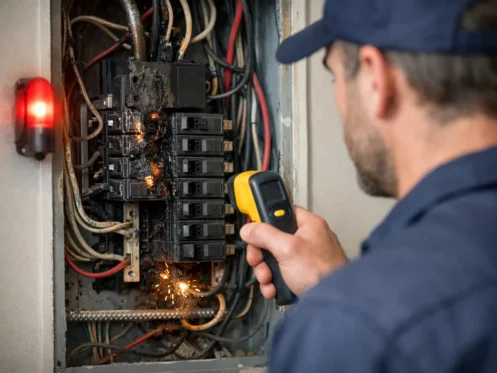
The exterior of a panel may feel slightly warm while it is carrying a substantial load, but it should never be too hot to touch comfortably. A hot panel door, hot breakers, scorch marks, melted plastic, or a burning odor can point to overheating connections, overloaded circuits, or failing equipment.
Treat these signs as urgent. Do not open the panel cover to investigate. If you can do so without touching damaged equipment, turn off the main breaker. Then call for emergency electrical service. Heat and burning odors can indicate active arcing, which can damage wiring and create a serious fire risk.
Breakers trip repeatedly or will not reset
A breaker trips to protect the wiring from an overload, short circuit, or ground fault. One trip after too many items are plugged into a circuit is often resolved by reducing the load. For example, a kitchen circuit may trip when a toaster oven, coffee maker, and microwave operate at once.
Repeated tripping is different. If the same breaker trips with normal use, trips immediately after resetting, or will not stay on, the problem may be a damaged appliance, a wiring fault, a loose connection, or a failing breaker. Do not keep resetting it. Repeated resets can allow a problem to worsen instead of solving it.
You hear buzzing, crackling, or popping
Electrical panels should operate quietly. A steady buzzing, crackling, sizzling, or popping sound near the panel deserves prompt attention. These sounds may be caused by loose terminals, a failing breaker, or arcing electricity jumping across a gap where it should not.
Do not assume a faint noise is harmless because the lights still work. Electrical faults can remain hidden behind the panel cover while generating damaging heat. Schedule a professional inspection as soon as possible, and call urgently if the noise is accompanied by heat, smoke, flickering, or a burning smell.
Lights flicker or power changes throughout the home
A single flickering light can be as simple as a loose bulb or a failing fixture. But lights that dim when the HVAC starts, brighten unexpectedly, flicker in several rooms, or pulse along with appliance use may signal a larger electrical issue.
The cause could be a loose connection in the panel, an overloaded service, damaged wiring, or an issue with the utility connection. Because voltage irregularities can harm electronics and appliances, this is not a situation to troubleshoot by trial and error. An electrician can determine whether the issue is inside the property or needs to be addressed by the utility provider.
The panel is rusty, wet, or visibly damaged
Water and electricity do not mix. Rust on the panel, corrosion around breakers, condensation, water stains, or a damp wall nearby all require professional evaluation. Moisture can corrode connections and create pathways for electricity to travel where it should not.
A panel located in a garage, basement, crawlspace, or utility area may be more exposed to humidity or leaks. Even after a leak is repaired, the electrical equipment may have sustained damage. If water has entered the panel or there has been flooding, avoid touching it and contact a licensed electrician promptly.
Breakers, outlets, or switches show damage
A breaker that is visibly cracked, loose, discolored, or difficult to move is not normal. The same goes for outlets and switches that feel hot, show discoloration, spark, or stop working. These symptoms may originate at the device, but they can also reflect a problem on the circuit or in the panel.
Do not use tape, force a breaker into position, or replace a breaker with a larger size to stop tripping. An oversized breaker can allow wiring to overheat before the breaker shuts off. Correct protection depends on the wire size, circuit design, and connected load.
Older Panels Need a Closer Look
Age alone does not automatically make an electrical panel unsafe. A well-maintained panel can serve a property for many years. However, older homes in Mebane and the surrounding area may have panels that were never designed for central air conditioning, modern kitchen appliances, home offices, EV chargers, or backup power equipment.
Warning signs of an undersized or outdated system include frequent use of extension cords, too few available circuits, crowded breaker spaces, fuse boxes, or a panel that is already full when you need to add a new appliance. Some older panel brands and equipment types also have known safety concerns. A licensed electrician can identify the panel, assess its condition, and explain whether repair, an upgrade, or replacement is the safest long-term choice.
It depends on the condition of the equipment and the demands of the property. A new EV charger, generator interlock, or major appliance does not always require a full panel replacement. But adding these loads to a panel that is already overloaded or deteriorating is not a safe shortcut.
What to Do When You See a Warning Sign
Your next step depends on the severity of the symptom. If there is smoke, fire, sparking, a strong burning smell, or an actively hot panel, move people away from the area and call 911. If it is safe to do so, shut off power at the main breaker without opening the panel or touching wet or damaged equipment.
For repeated breaker trips, flickering lights, corrosion, or an aging panel that cannot support planned upgrades, arrange a professional electrical inspection. Before the visit, make a note of which breaker trips, what was running at the time, where lights flicker, and whether the issue is getting worse. Those details help the electrician diagnose the root cause efficiently.
Avoid opening the panel’s inner cover. Turning a breaker on or off at the exterior is one thing; working around exposed conductors inside the panel is another. Even with the main breaker off, some areas may remain energized. Electrical panel repairs and upgrades require the right testing equipment, training, permits, and knowledge of current code requirements.
When an Inspection Is Worth Scheduling
An electrical safety inspection is a practical choice after buying an older home, before listing a property, following storm or water damage, or when planning renovations. It is also useful if you have added high-demand equipment such as a hot tub, workshop tools, an EV charger, or portable generator connection.
During an inspection, a qualified electrician can evaluate breaker condition, panel capacity, grounding and bonding, visible wiring concerns, load demands, and signs of overheating or improper past work. The goal is not to recommend replacement for every older panel. It is to give you a clear picture of what is safe now, what needs repair, and what upgrades will prevent future problems.
Electrical problems rarely become safer by waiting. If your panel is showing any of these warning signs, Mebane Electrical Services can provide a thorough assessment, explain the findings in plain language, and recommend a lasting repair or upgrade that fits your property.