
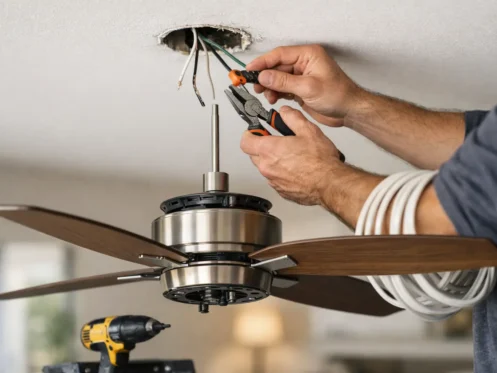
A ceiling fan can make a bedroom, porch, or living room far more comfortable, but ceiling fan installation without existing wiring is not a simple matter of attaching a fan to the ceiling. The project requires a safe path for new cable, a properly supported electrical box, and a code-conscious connection to your home’s electrical system. Done correctly, it is a lasting upgrade. Done carelessly, it can create shock, fire, or falling-fan hazards.
For many homeowners, the question is not whether a fan would help. It is whether adding one will mean opening walls, tearing up ceilings, or taking on a major electrical project. The answer depends on your home’s layout, the location of the electrical panel, access above the ceiling, and whether an existing nearby circuit can safely support the new load.
What Ceiling Fan Installation Without Existing Wiring Involves
When there is no ceiling fixture or wiring in the desired location, an electrician must create a new, permanent electrical path to the fan. That typically starts with identifying a suitable power source, such as a nearby lighting circuit, switch box, or an available circuit at the electrical panel.
The right source is not always the closest one. A circuit may already serve too many devices, have outdated wiring, or lack the capacity needed for another load. A licensed electrician evaluates the circuit condition and determines whether extending it is appropriate or whether the fan should receive a new dedicated run.
From there, wiring is routed to the ceiling location. In a one-story home with attic access, this may be relatively straightforward. In a finished room beneath another floor, a vaulted ceiling, or a condominium with limited access, the installation may require more careful planning. Small, strategic openings in drywall are sometimes needed, but experienced electricians work to keep repairs as limited as the structure allows.
The fan also needs a wall switch. Depending on how you want to use it, the switch may control the fan and light together, provide separate controls for each, or work alongside a remote-control fan. A remote does not eliminate the need for safe, permanent wiring. It simply changes how the fan is operated after installation.
The Ceiling Box Must Be Rated for a Fan
One of the most critical parts of the job is hidden above the ceiling. A standard light-fixture box is not automatically strong enough to support a ceiling fan. Fans create vibration and moving weight, especially when they run at higher speeds. A box that is only rated for a light fixture can loosen over time or fail.
A fan-rated electrical box is securely attached to framing or supported with an approved brace designed for ceiling fans. The box must be rated for the fan’s weight and installed according to the manufacturer’s instructions. This is not an area where a heavy-duty-looking box, drywall anchors, or improvised hardware is an acceptable substitute.
If a fan is replacing an existing light fixture, the existing box should still be checked. The presence of a ceiling light does not confirm that the box can hold a fan. This inspection is quick, but it prevents a common and serious installation mistake.
Where Can the New Wiring Come From?
Every home is different, but a few options are commonly considered. The best choice depends on access, circuit capacity, the age of the wiring, and local code requirements.
An electrician may extend an appropriate nearby lighting circuit if it has sufficient capacity and is in good condition. This can be efficient when the fan is being installed near an existing switch or fixture. In other situations, running a new circuit from the panel is the better long-term solution, particularly if the room has electrical limitations or the existing circuit is already heavily used.
A nearby receptacle is sometimes physically convenient, but it is not automatically the correct source. Outlet circuits may serve computers, space heaters, kitchen equipment, or other loads that make an added fan less desirable. The wiring method must also allow the fan to be controlled properly from a wall switch.
Older homes throughout Mebane and the surrounding area can introduce additional considerations. Previous renovations may have left behind concealed junction boxes, aging cable, limited panel capacity, or wiring that does not meet current safety expectations. A professional assessment helps identify those conditions before new work is tied into an old system.
Access Determines Cost and Complexity
The fan itself may be an affordable purchase, but access is often what drives the scope of installation. An open attic above the room generally gives an electrician a clear route for new cable and secure support for the fan-rated box. That can reduce labor and drywall repair needs.
A finished ceiling with a second story above it takes more investigation. Wiring may need to be routed through walls, from another room, or through a carefully planned ceiling opening. Brick walls, plaster ceilings, cathedral ceilings, and finished basements can add time because they restrict access to framing and electrical pathways.
This does not mean the project is impossible. It means an accurate estimate should follow a site evaluation rather than a guess over the phone. Clear pricing starts with understanding the route, the switch location, the fan weight, and whether repairs or upgrades are required along the way.
Why DIY Fan Wiring Can Create Real Risks
Installing the fan blades and canopy may look manageable, but adding wiring where none exists involves more than matching wire colors. Electrical work requires correct grounding, secure splices inside approved boxes, proper cable protection, suitable circuit selection, and safe support for the fixture.
Common do-it-yourself problems include tapping into an overloaded circuit, leaving a junction inaccessible behind drywall, using a non-fan-rated box, failing to secure cable correctly, or mixing up switch wiring. Some issues may not show up immediately. A loose connection can create heat over time, while an improperly supported fan can become unstable only after months of use.
There is also the question of permits and inspections. Requirements vary by location and project scope, but electrical changes may require permits to help ensure the work is safe and code-compliant. This matters when selling a property, managing a rental, completing an insurance claim, or simply protecting the people who live in the home.
Choosing the Right Fan Before Installation
Before scheduling the work, choose a fan sized for the room and appropriate for its location. A small fan may not move enough air in a large living area, while an oversized fan can overwhelm a compact bedroom. Ceiling height matters too. Blades should maintain proper clearance from the floor, walls, and nearby fixtures.
For bathrooms, covered porches, garages, or other damp locations, select a fan rated for that environment. Damp-rated and wet-rated are not interchangeable. A fan exposed to rain or direct weather needs a wet-rated design, while a covered porch may only need a damp-rated model depending on exposure.
Consider how you want the fan controlled before wiring begins. A standard wall switch is simple and dependable. Separate fan and light controls offer more flexibility. Remote-controlled fans are convenient, though some homeowners prefer a wall control so the fan can be operated without searching for a remote. Smart fans can add scheduling and app control, but they still need a correctly installed electrical connection.
What to Expect From a Professional Installation
A qualified electrician starts by reviewing the room, ceiling structure, desired fan location, and available electrical sources. They can explain the practical options, including which approach will cause the least disruption while still providing a safe, permanent result.
The work should include installing an approved fan-rated box, routing and protecting the new wiring, making secure connections, installing the selected switch or controls, and testing the fan at each speed. The electrician should also check that the fan is stable, the light operates correctly if included, and the circuit is properly grounded and protected.
Mebane Electrical Services approaches ceiling fan work with the same attention given to larger electrical upgrades: diagnose the conditions first, explain the options clearly, and complete the repair or installation for long-term reliability. Whether the job involves one bedroom fan or several fixtures during a renovation, the goal is a safe installation that does not leave hidden problems behind.
When to Schedule an Electrical Evaluation
Arrange an evaluation if you want a fan in a room with no overhead fixture, notice flickering lights or warm switches nearby, have an older home with uncertain wiring, or are planning to add multiple fans. It is also wise to have the electrical panel reviewed if breakers trip often or you are combining fan installation with new lighting, EV charging, a generator connection, or other upgrades.
A ceiling fan should bring comfort, not a question mark above your head. With the right wiring route, a properly rated support box, and experienced electrical work, you can enjoy reliable airflow and a safer home for years to come.