
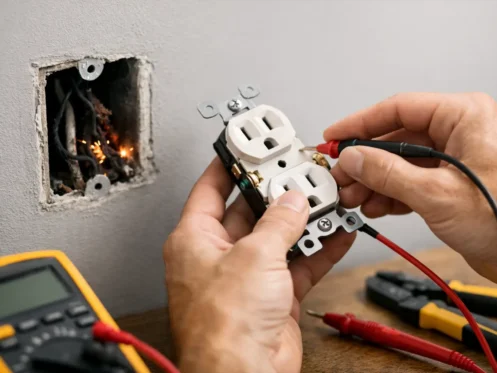
A phone charger works in one room but not another. A kitchen outlet suddenly goes dead halfway through breakfast. Or an entire wall of receptacles stops working after a storm. If you are asking, why do outlets stop working, the answer may be simple – but it can also point to a loose connection, overloaded circuit, or wiring issue that needs prompt attention.
An outlet that will not provide power is more than an inconvenience when it serves appliances, work equipment, sump pumps, refrigerators, or medical devices. The safest approach is to make a few basic checks, recognize the warning signs, and call a licensed electrician when the cause is not immediately clear.
Why Do Outlets Stop Working in a Home?
Outlets usually stop working because the electrical circuit supplying them has been interrupted. That interruption may happen at the electrical panel, at a GFCI outlet, at another outlet upstream on the same circuit, or inside the outlet box itself.
One important detail: outlets are often connected in a series along a circuit. That means a problem with one receptacle can affect several others farther down the line. The outlet that appears dead may not be the location of the actual problem.
A Tripped Circuit Breaker
A circuit breaker is designed to shut off power when it senses an overload, a short circuit, or another fault. This is one of the most common reasons outlets lose power. It can happen after running a space heater, microwave, air fryer, hair dryer, shop vacuum, or several electronics on the same circuit.
Check your electrical panel for a breaker that is in the middle position or appears off. To reset it properly, move the breaker fully to the OFF position first, then firmly back to ON. If it immediately trips again, do not keep resetting it. Repeated tripping means the circuit is detecting a problem that requires diagnosis.
A Tripped GFCI Outlet
Ground-fault circuit interrupter, or GFCI, outlets are common in bathrooms, kitchens, garages, unfinished basements, laundry areas, crawl spaces, and exterior locations. They are designed to quickly cut power when they detect a possible ground fault, reducing the risk of electric shock.
A single GFCI outlet can protect several standard outlets connected downstream. For example, a GFCI in a garage may control exterior outlets, or one in a bathroom may affect another bathroom receptacle. Look for outlets with TEST and RESET buttons and press RESET firmly. If it will not reset, or resets and trips again, stop using that circuit until an electrician can determine why.
A Loose or Damaged Connection
An outlet can fail even when the breaker remains on. Over time, normal use can loosen the connections behind a receptacle, especially in older homes or heavily used locations. A loose wire can interrupt power to that outlet and to other outlets on the same circuit.
This is not a repair to ignore. Loose electrical connections can generate heat, damage wiring insulation, and create a fire risk. An outlet that feels warm, makes crackling sounds, has discoloration, smells burnt, or no longer holds a plug securely should be inspected as soon as possible.
An Overloaded Circuit
Many outlet problems begin with a circuit being asked to carry more than it was designed to handle. Extension cords and power strips can make it easy to plug several high-demand items into outlets that share one breaker.
The issue is not always the number of plugs. It is the total electrical load. Portable heaters, window air conditioners, toaster ovens, hair dryers, and garage tools use far more power than a phone charger or lamp. If a breaker trips whenever certain equipment is used, the circuit may be overloaded, the appliance may have a fault, or the home may need a dedicated circuit for that equipment.
A Faulty Outlet or Worn Receptacle
Like any mechanical device, outlets wear out. The metal contacts inside a receptacle can loosen after years of plugging and unplugging cords. A plug that falls out, sits loosely, or only works when held at a certain angle is a sign the outlet should be replaced.
Do not rely on a power strip or extension cord as a permanent workaround. Those products are useful for temporary, low-demand needs, but they do not correct a worn outlet or add capacity to an overloaded circuit.
A Wiring Problem in an Older or Recently Remodeled Property
Older homes in the Mebane, Durham, Burlington, and Chapel Hill area can have wiring systems that have been modified over decades. A previous repair, renovation, fixture replacement, or DIY project may leave behind loose splices, damaged wires, improperly connected outlets, or circuits that no longer meet current needs.
Newer homes are not immune. Construction defects, rodent damage, moisture intrusion, nail damage from a remodeling project, and failed devices can all interrupt an outlet circuit. Finding the root cause often requires testing at the panel and at multiple points along the circuit. That is why a professional diagnosis is more valuable than simply replacing the outlet that stopped working.
Safe Checks You Can Make Before Calling
Before arranging service, start with a few checks that do not require removing a cover plate or touching wiring. Unplug devices from the affected outlet and test it with a lamp or charger you know works. Sometimes the problem is a failed appliance cord, charger, or power strip rather than the outlet itself.
Next, check nearby outlets and lights. Knowing whether one outlet, one room, or several areas are affected helps narrow down the issue. Reset any tripped breaker once, and check GFCI outlets in nearby bathrooms, kitchens, garages, utility rooms, and exterior areas.
If power returns after resetting a breaker or GFCI, pay attention to what was plugged in when it tripped. Avoid immediately reconnecting every device. Add items back one at a time so you can identify whether a particular appliance or excessive load is causing the issue.
When an Outlet Problem Is an Electrical Safety Concern
Some symptoms call for a licensed electrician rather than more troubleshooting. Turn off the circuit if you can do so safely, keep people away from the outlet, and request service promptly when you notice any of the following:
- A burning smell, smoke, scorch marks, melted plastic, buzzing, or crackling
- An outlet or cover plate that feels hot to the touch
- Sparks beyond a brief, small spark when plugging in a device
- A breaker or GFCI that repeatedly trips
- Flickering lights, intermittent power, or outlets that work only sometimes
- Water exposure near an outlet, including a wet exterior receptacle
These signs may indicate a loose connection, short circuit, moisture problem, damaged wiring, or failing electrical component. Resetting the breaker again and again can allow the underlying problem to get worse.
Why a Permanent Repair Matters
It is tempting to replace a dead outlet and assume the job is finished. Sometimes a failed receptacle is exactly the issue. Other times, the dead outlet is only the first visible symptom of a fault elsewhere on the circuit.
A qualified electrician can test the circuit, inspect connections, identify whether the issue is at the panel or a downstream device, and make the appropriate repair. Depending on the findings, the right solution may be a receptacle replacement, GFCI replacement, wiring repair, breaker replacement, circuit upgrade, or electrical panel evaluation.
The trade-off is straightforward: a quick guess may restore power temporarily, while proper diagnostics address the reason it failed. That matters most in homes with older wiring, frequent breaker trips, added appliances, EV charging needs, or planned renovations.
Get Help When the Cause Is Not Clear
An outlet that stops working should not leave you guessing about the safety of your home or business. Mebane Electrical Services provides thorough outlet and circuit diagnostics, clear explanations, and repairs intended to resolve the problem for the long term.
If your reset does not restore power, the outlet shows signs of heat or damage, or the same issue keeps returning, schedule a professional inspection. A reliable electrical system begins with finding the real source of the problem – not just restoring power for the moment.