
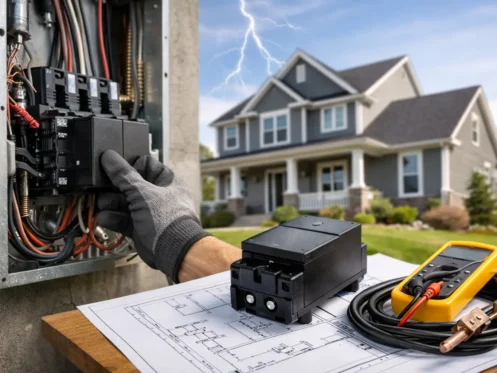
A thunderstorm does not need to hit your home directly to damage expensive equipment. A nearby lightning strike, a utility switching event, or a large appliance cycling on can send a brief voltage spike through wiring. Your lights may never flicker, yet that spike can slowly weaken circuit boards in a refrigerator, HVAC system, television, modem, or EV charger. This whole home surge protection guide explains what a whole-home system does, where it fits, and when it makes sense to call a licensed electrician.
What Whole-Home Surge Protection Does
A whole-home surge protector is a surge protective device installed at or near your main electrical panel. Its job is to redirect excess voltage away from your home’s electrical system during a surge. It is designed to protect the circuits feeding the house, rather than only one outlet or one device.
That broad coverage matters because many of the most expensive items in a modern home are hardwired. Heat pumps, air handlers, kitchen appliances, garage door openers, well pumps, security systems, and smart-home controls often cannot be protected by a basic plug-in strip alone. A panel-mounted device provides a first line of defense for the equipment throughout the home.
It is not a guarantee that every electronic component will survive every electrical event. A direct lightning strike or severe utility problem can cause damage beyond what any residential surge protector can handle. Still, professionally installed protection can substantially reduce the risk from common transient surges and help extend the working life of sensitive electronics.
Why Surges Happen Even on Clear Days
Lightning gets most of the attention in North Carolina, especially during summer storms. But it is only one source of damaging electrical spikes. Small, repeated surges can also originate inside the house as motors and compressors turn on and off.
Common sources include HVAC equipment, refrigerators, sump pumps, power tools, elevators in nearby commercial buildings, utility-grid switching, and outages followed by power restoration. Homes with newer electronics may have more exposure than older homes because so many everyday systems now rely on circuit boards.
A surge protector cannot correct every electrical issue. Frequent breaker trips, flickering lights, warm outlets, burning smells, or a buzzing panel call for a thorough electrical diagnosis. Those symptoms may point to a loose connection, overloaded circuit, damaged wiring, or panel problem that must be repaired at the source.
Whole-Home Protection and Power Strips Work Together
A common question is whether a whole-home surge protector makes plug-in surge strips unnecessary. The practical answer is no. These products protect at different points in the electrical system.
A panel-mounted surge protective device handles much of the energy from surges entering or moving through the home’s wiring. Point-of-use protectors add another layer for sensitive equipment such as computers, televisions, gaming systems, network equipment, and home office devices. For valuable electronics, layered protection is usually the better approach.
Not every power strip is a surge protector. A basic strip only adds outlets. Look for products clearly identified as surge protective devices, and replace them if the indicator light shows protection is no longer active. After a major surge event, it is wise to inspect both plug-in protection and the status indicator on the whole-home unit.
Do Not Forget Cable, Phone, and Data Lines
Electrical surges can enter through more than power wiring. Cable, phone, antenna, and Ethernet connections can also carry damaging voltage to connected equipment. If a television, modem, or security system connects to outside wiring, appropriate protection for those pathways may be part of the overall plan.
This is one reason a site-specific evaluation matters. The best setup for a simple home office may differ from the right approach for a home with security cameras, a detached garage, solar equipment, or extensive networking.
Choosing the Right Whole-Home Surge Protection Setup
The device itself is only part of the decision. A licensed electrician should evaluate the service panel, available breaker space, grounding and bonding, panel manufacturer requirements, and the electrical loads you want to protect.
Many homes use a Type 2 surge protective device installed at the main service panel or a subpanel. Some installations may call for a different configuration depending on the service equipment and the home’s electrical design. The unit should be properly listed for the application and installed according to the manufacturer instructions and applicable electrical code.
Key factors include the device’s surge current rating, voltage protection rating, warranty terms, visual status indicators, and whether it is compatible with your panel. Higher ratings can be useful, but the right selection is not simply a matter of buying the biggest number on the box. Installation location, lead length, panel condition, and grounding quality all affect real-world performance.
A surge protector also needs a sound electrical foundation. Grounding and bonding help provide a safe path for fault current and help surge protection perform as intended. If an electrician finds corroded equipment, an outdated panel, missing bonding, or other deficiencies, those issues should be addressed rather than covered up with a new device.
When a Panel Upgrade Should Come First
Whole-home surge protection is often a straightforward addition to a modern, well-maintained panel. It becomes more complicated when the panel is full, damaged, outdated, or showing signs of overheating.
If you are planning an EV charger, generator connection, major kitchen upgrade, addition, or HVAC replacement, this is a smart time to evaluate the panel and surge protection together. These projects increase the value of the electrical equipment in your home and may increase demand on an older service.
A panel replacement is not automatically required just because you want surge protection. An experienced electrician can explain whether your existing equipment can safely accept a compatible device or whether an upgrade will provide a better long-term solution. Clear recommendations should include the reason for the work, not pressure to replace equipment that still serves the home safely.
What Professional Installation Should Include
Whole-home surge protection is not a do-it-yourself project. Work inside an electrical panel exposes people to energized components, even when the main breaker is switched off. Incorrect installation can create shock, fire, equipment, and code-compliance risks.
A professional visit should begin with an assessment of your service equipment and your goals. The electrician should identify the appropriate installation point, confirm device compatibility, inspect accessible grounding and bonding components, and discuss any condition that affects safety or performance.
After installation, the electrician should verify operation and show you how to read the device’s status indicator. Keep the device information with your home records, especially if you are buying or selling property, filing an equipment warranty claim, or planning later electrical upgrades.
For homeowners in Mebane and nearby communities, Mebane Electrical Services can help evaluate surge protection alongside panel upgrades, generator connections, inspections, and other electrical improvements. The goal is not to add equipment for its own sake. It is to provide a safe, lasting solution that fits the home.
Signs Your Home Is a Good Candidate
Most homes with modern electronics can benefit from whole-home surge protection, but it is especially worth considering after a nearby lightning event, during a panel upgrade, or before installing high-value equipment. It is also a practical upgrade if you have experienced unexplained appliance board failures or live in an area with frequent storms and outages.
Consider scheduling an evaluation if your home has several of the following:
- Central air conditioning, a heat pump, or high-efficiency appliances with electronic controls
- A home office with computers, routers, monitors, and connected storage devices
- An EV charger, generator equipment, smart-home controls, or security cameras
- A recently renovated kitchen, entertainment room, or workshop
- An older electrical panel that has not been inspected in years
Protection is most effective when it is planned before damage occurs. Waiting until a storm destroys an HVAC control board or a power event takes out a computer can turn a modest preventative upgrade into a costly repair and replacement decision.
Maintenance and Replacement Expectations
Surge protectors do not last forever. Each significant surge can reduce the device’s remaining protective capacity, which is why status lights matter. If the unit indicates it has lost protection, arrange replacement promptly. Do not assume the electrical system remains protected simply because the lights and outlets still work.
There is no universal replacement schedule because surge exposure varies by location, weather, utility conditions, and household equipment. During regular electrical service, panel work, or a safety inspection, ask the electrician to check the surge protector’s condition. It is a small step that helps keep the system working as intended.
The best time to think about surge protection is before the next storm, outage, or equipment upgrade. A qualified electrician can assess your panel, explain the options in plain language, and help you protect the electrical systems your household relies on every day.