
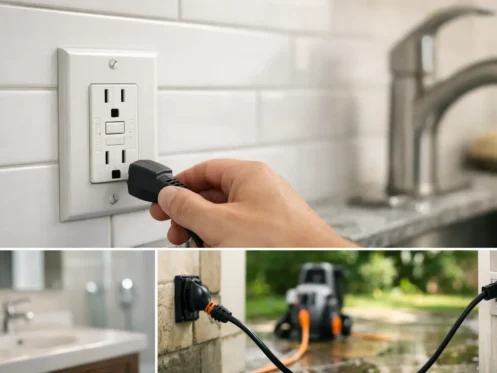
A bathroom outlet may look ordinary until moisture, a damaged cord, or a faulty appliance turns it into a shock hazard. Knowing when to install GFCI outlets helps protect the people using your home or business – especially in areas where water, concrete, outdoor exposure, or portable tools are part of daily life.
GFCI stands for ground-fault circuit interrupter. These devices monitor the flow of electricity and shut off power very quickly when they detect an imbalance that could mean current is traveling through a person or an unintended path. They are a critical layer of protection, but they must be installed in the right locations and wired correctly to do their job.
When to Install GFCI Outlets
The clearest time to install a GFCI outlet is when you are adding, replacing, or upgrading a receptacle in an area exposed to moisture or likely to be used with electrical equipment near water. In many cases, current electrical codes require GFCI protection during renovations, additions, and new construction. Existing older outlets may not always have to be brought up to current standards simply because they are old, but replacing an outlet or changing the circuit can trigger code requirements.
A licensed electrician can evaluate the specific work being performed, the age and layout of your wiring, and the electrical code requirements that apply to your property. This matters in older homes around Mebane and the Triangle, where previous repairs may have left behind ungrounded outlets, mixed wiring methods, or circuits that do not match modern safety expectations.
Install GFCI Protection Near Water
Bathrooms are one of the most familiar locations for GFCI-protected outlets. A hair dryer, electric razor, curling iron, or phone charger can be used close to a sink, tub, or wet counter. GFCI protection is designed to react before a ground fault becomes a serious injury.
Kitchens also commonly require GFCI protection, particularly for countertop receptacles and outlets serving areas around sinks. Countertop appliances move frequently, cords can become damaged, and water from cooking and cleaning is never far away. If you are remodeling a kitchen, adding an island, or installing new under-cabinet outlets, this protection should be part of the electrical plan from the start.
Other locations frequently requiring or benefiting from GFCI protection include laundry areas, garages, unfinished basements, crawl spaces, outdoor areas, and receptacles near sinks outside the kitchen. The details vary by circuit, outlet location, and the version of the code adopted by the local authority, so it is wise to confirm requirements before work begins.
Add Protection During a Remodel or Addition
A remodel is often the best time to correct outdated outlet protection. Walls and ceilings may already be open, circuits may be extended, and new fixtures or appliances can increase demand on existing wiring. Addressing GFCI protection as part of the project is usually more efficient than discovering a deficiency after the work is finished.
This applies to bathroom upgrades, finished basements, garage conversions, outdoor kitchens, laundry room renovations, and accessory buildings. A new wet bar or utility sink may seem like a small addition, but it changes how nearby outlets are used. Planning the right protection before drywall, tile, cabinets, or flooring is installed helps avoid unnecessary rework later.
Replace a Damaged, Failed, or Outdated GFCI
GFCI devices do not last forever. Like other electrical components, they can wear out, become damaged, or fail their internal test mechanism. If the reset button will not stay engaged, the test button does not trip the device, the outlet has visible heat damage, or it repeatedly loses power without an obvious reason, it needs professional attention.
A tripping GFCI is not automatically a bad outlet. It may be responding correctly to a damaged appliance, moisture in an outdoor box, deteriorated wiring, or a fault elsewhere on the protected circuit. Replacing the device without diagnosing the cause can hide a problem temporarily rather than permanently resolve it.
If you have an older outlet near water that lacks test and reset buttons, do not assume it has no GFCI protection. It may be protected by an upstream GFCI receptacle or a GFCI breaker in the electrical panel. An electrician can test the circuit and identify where the protection is located.
GFCI Outlet vs. GFCI Breaker: Which Is Better?
A GFCI receptacle protects the outlet where it is installed and can also protect properly wired outlets downstream. It is often a practical choice when adding protection to a specific bathroom, kitchen, garage, or outdoor circuit. The test and reset buttons are accessible at the outlet, which can make a simple trip easy for a homeowner to reset after the cause has been corrected.
A GFCI circuit breaker provides protection at the electrical panel for the entire circuit. It can be a good option when multiple outlets need protection or when there is no convenient place for a GFCI receptacle. The trade-off is that resetting the breaker requires access to the panel, and a tripped breaker may not immediately show which appliance or outlet caused the issue.
The best choice depends on the circuit layout, panel capacity, existing wiring, and what equipment the circuit serves. Some projects also require other protective devices, such as arc-fault circuit interrupters. A professional assessment prevents an upgrade from becoming a patchwork of mismatched devices and unexplained trips.
What GFCI Protection Does Not Fix
GFCI protection is highly effective at reducing shock risk, but it is not a substitute for sound wiring or proper grounding. A GFCI can protect an ungrounded outlet in certain circumstances, but it does not create an equipment grounding path for surge protectors, sensitive electronics, or appliances that require one.
It also will not correct overloaded circuits, loose connections, damaged insulation, water intrusion, or an outdated electrical panel. If lights dim when an appliance starts, outlets feel warm, breakers trip often, or you notice a burning odor, treat those as warning signs that require a qualified electrician. The right repair may involve more than replacing one outlet.
Why Professional Installation Matters
Installing a GFCI outlet can appear straightforward, but the wiring details matter. The device has separate line and load terminals. Connecting them incorrectly can leave downstream outlets unprotected, create confusing reset behavior, or prevent the device from operating as intended. Shared neutrals, multi-wire branch circuits, aluminum wiring, and older electrical boxes add further complications.
Outdoor installations require more than a GFCI device. They may need weather-resistant receptacles, an approved in-use cover, correctly rated boxes, and secure connections that keep moisture out. In garages, crawl spaces, and basements, the electrician also needs to assess the environment and the condition of the circuit feeding the outlet.
Mebane Electrical Services provides clear diagnostics and upfront communication before recommending repairs or upgrades. Whether you need one failed bathroom outlet replaced or a broader safety update during a renovation, licensed workmanship helps ensure the protection is correctly installed, tested, and built to last.
Test GFCI Outlets Before You Need Them
After installation, GFCI outlets should be tested periodically according to the manufacturer’s instructions. In most cases, pressing the TEST button should shut off power to the outlet, and pressing RESET should restore it. If the outlet does not trip, does not reset, or still has power after testing, stop using it and arrange for service.
Be cautious with a GFCI that trips repeatedly. Unplug devices on the circuit and reset it once. If it immediately trips again, do not keep forcing the reset button. The circuit may have a moisture problem, a defective appliance, or a wiring fault that needs to be found and corrected.
The best time to address GFCI protection is before a close call, not after one. If you are updating a room, replacing outlets, or concerned about older wiring near water, a professional electrical safety inspection can give you clear answers and a practical path forward.