
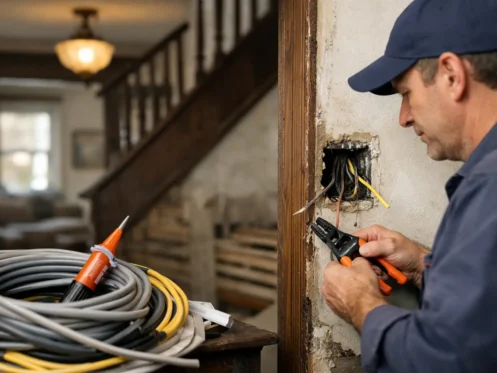
A charming older home can have solid plaster walls, original woodwork, and an electrical system that was never designed for central air, kitchen appliances, home offices, or EV chargers. House rewiring for old homes is not always necessary just because a property has age, but it becomes a serious safety and reliability conversation when the wiring can no longer safely carry modern electrical demand.
The right answer starts with a professional inspection, not a guess based on the year the home was built. Some older homes have received quality upgrades over time. Others have a newer panel connected to aging branch wiring behind the walls. A licensed electrician can evaluate the whole system, explain what is still serviceable, and identify where a permanent repair or full rewire makes the most sense.
Signs Your Older Home May Need Rewiring
Electrical problems often give homeowners warning before they become an emergency. A breaker that trips once after an overloaded power strip may have a simple explanation. Repeated tripping, heat, flickering, or unreliable outlets deserves a closer look.
Common signs include:
- Breakers or fuses that trip repeatedly, especially when normal appliances are in use
- Lights that dim or flicker when the HVAC system, microwave, or other equipment starts
- Warm, buzzing, discolored, cracked, or loose outlets and switches
- A burning odor, sparking, or a shock when touching a fixture, appliance, or metal cover plate
- Two-prong outlets throughout the home, widespread extension-cord use, or an undersized electrical panel
Older wiring methods can also affect the decision. Knob-and-tube wiring, cloth-covered wire, ungrounded circuits, and certain aging aluminum branch circuits may require special attention. The presence of one of these systems does not automatically mean every wire must be replaced immediately. Its condition, previous alterations, load capacity, and how the home is used all matter. Still, these systems should be assessed by a qualified electrician rather than covered up with cosmetic outlet upgrades.
Why Old Wiring Struggles With Modern Living
Many homes built decades ago were wired for a much smaller electrical load. A few lights, a refrigerator, and basic household appliances did not require the number of dedicated circuits a modern home needs. Today, homeowners may be running computers, televisions, high-capacity kitchen equipment, bathroom appliances, heat pumps, laundry equipment, security systems, and chargers all at once.
When the system is asked to do more than it was designed to handle, the result can be nuisance tripping, overheating connections, damaged equipment, and fire risk. Adding more outlets to an overloaded circuit is not a real solution. Neither is replacing a fuse or breaker with a larger size without determining whether the wire can safely support it. Those shortcuts can remove a warning mechanism while leaving the underlying hazard in place.
A rewire gives the electrical system a new foundation. It can add properly grounded wiring, dedicated circuits where needed, safer outlet protection in appropriate areas, and capacity for future upgrades. It also gives an electrician the opportunity to correct hidden problems from past repairs, such as improper splices, overloaded junction boxes, or wiring that was damaged during renovations.
What a House Rewiring Project Usually Includes
A full rewire is more involved than replacing a panel. The panel is the distribution point for power, while branch wiring carries electricity through the home to lights, switches, appliances, and outlets. A complete project may include replacing branch circuits, upgrading the electrical panel, installing grounded receptacles, updating switches and lighting connections, and adding required safety devices.
The exact scope depends on the home. A property with a sound, modern panel but deteriorated wiring in one original section may only need a partial rewire. A home that still has fuse boxes, limited circuits, and widespread ungrounded wiring may benefit from a more comprehensive plan. If you are opening walls for a kitchen remodel, addition, or major renovation, that can be a practical time to address wiring in those areas.
An electrician should also consider the home’s future needs. Planning for a generator connection, an EV charger, a workshop, an electric range, or expanded HVAC equipment during the design stage may cost less than revisiting the wiring later. This does not mean installing every upgrade immediately. It means creating a system with sensible capacity and a clear path forward.
What to Expect During an Older Home Rewire
The first step should be an on-site assessment. The electrician will inspect the service equipment, panel, visible wiring, outlets, fixtures, grounding, and the areas where power demand is highest. They may also ask about breaker trips, renovations, appliance plans, and concerns from a home inspection.
After the evaluation, you should receive a clear explanation of the recommended work. A good estimate identifies what is being replaced, what is being added, whether panel work is included, and what wall or ceiling access may be needed. Older homes can reveal conditions that are not visible until work begins, so honest communication about possible variables matters. A contractor should explain how those situations will be handled instead of surprising you with vague charges at the end.
Most rewiring requires strategic access to walls, ceilings, attics, crawl spaces, or basements. Experienced electricians work carefully to limit disruption, but some opening and patching may be unavoidable. Homes with accessible attics and crawl spaces are often easier to rewire than homes with finished ceilings, plaster walls, or multiple past additions.
For a full-house project, temporary power planning is also part of the job. Some circuits can remain active while others are being replaced, depending on the layout and safety requirements. Your electrician should tell you when outages are expected, whether you need to move furniture or protect belongings, and how long each phase is likely to take.
Permits and inspections are another essential part of the process. Electrical work should meet applicable local requirements and be completed by a licensed professional. That protects the homeowner, supports resale documentation, and provides a level of accountability that unpermitted work does not.
Rewiring Costs: What Changes the Price
There is no responsible one-price answer for rewiring an older home. Square footage matters, but access often matters just as much. A small home with difficult plaster walls, a finished basement, and outdated service equipment can require more labor than a larger home with open attic access.
The main cost factors are the condition of existing wiring, number of circuits needed, panel capacity, accessibility, required repairs to walls or ceilings, and the number of fixtures and outlets being updated. Projects that include a service upgrade, generator readiness, major kitchen changes, or EV charging provisions will have a broader scope.
The lowest quote is not always the best value if it leaves unsafe wiring in place or omits essential work. Ask what is included, how the contractor will protect the home, whether permits are part of the plan, and how changes will be communicated. Transparent pricing and detailed diagnostics help you make a decision based on the actual condition of your home.
Do Not Treat Symptoms as the Whole Problem
A new outlet cover, a replacement breaker, or a brighter light fixture can make an electrical issue look resolved when the real problem is still behind the wall. This is particularly common in older properties where updates occurred one room at a time over many years.
If you notice repeated electrical issues, an inspection can help separate a small repair from a system-wide concern. That clarity is valuable whether you plan to stay in the home for decades, prepare it for sale, manage a rental property, or renovate before moving in.
For homeowners in Mebane and nearby communities, Mebane Electrical Services can assess older electrical systems, explain the available options in plain language, and complete the work with safety and lasting results in mind. If your home’s electrical system is showing its age, addressing it before a failure gives you more control over the schedule, scope, and solution.