
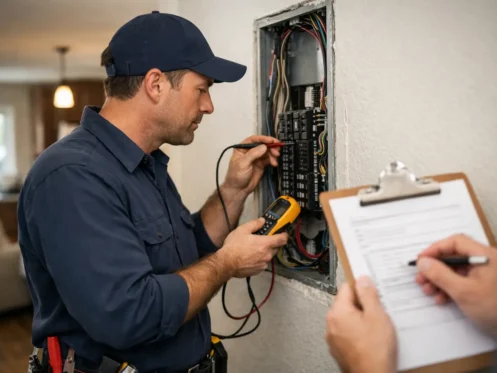
A home inspection report can turn an otherwise smooth sale into a stressful round of negotiations, especially when it identifies electrical concerns. Hiring an electrician for home inspection repairs gives buyers, sellers, and Realtors a clear path forward: identify what the report actually means, correct the issue safely, and document completed work without guessing or cutting corners.
Not every electrical notation carries the same urgency. Some findings are straightforward repairs, while others point to aging equipment, unsafe wiring practices, or a panel that no longer meets the home’s needs. The right response starts with a licensed electrician who can diagnose the condition in person rather than relying on a brief inspection report alone.
What an Electrical Home Inspection Finding Really Means
Home inspectors provide a valuable overview of visible conditions, but they do not perform the same testing, repairs, or code-level evaluation as an electrical contractor. Their report may call out an open junction box, a missing GFCI outlet, double-tapped breakers, damaged wiring, or an older panel. That finding is a signal to investigate, not always a complete repair scope.
For example, a note about a tripping breaker could be caused by an overloaded circuit, a failing breaker, a loose connection, or an appliance issue. Replacing the breaker without finding the reason it tripped can leave the real hazard in place. A professional electrician tests the circuit, explains the cause in plain language, and recommends the repair that permanently resolves the problem.
This distinction matters during a real estate transaction. Sellers want to avoid paying for unnecessary work. Buyers want confidence that a repair is safe and lasting, not a quick patch made to get through closing. A detailed assessment helps both sides make decisions based on the actual condition of the system.
Common Repairs an Electrician May Find Necessary
Electrical reports often contain familiar terms that sound more intimidating than they are. A missing cover plate, an unsecured cable, or an outlet with reversed polarity may be a relatively contained repair. Still, even a small defect deserves proper attention because electrical safety depends on every connection, device, and enclosure doing its job.
Some of the most common requests involve GFCI protection in bathrooms, kitchens, garages, crawl spaces, and exterior locations. GFCI devices are designed to shut off power quickly when they detect a ground fault, reducing the risk of shock. In an older home, adding or correcting this protection may involve replacing a receptacle, adjusting the circuit arrangement, or using GFCI breaker protection at the panel.
Panels are another frequent concern. An inspector may identify corrosion, missing knockout covers, overcrowded wiring, improperly sized breakers, or multiple conductors under a terminal not rated for them. These conditions range from targeted panel repairs to a recommendation for a replacement or upgrade. The appropriate solution depends on the panel’s condition, capacity, manufacturer, and the electrical demands of the home.
Aluminum wiring, cloth-insulated wiring, ungrounded outlets, and older fuse equipment also deserve careful evaluation. They do not automatically mean a home must be completely rewired, but they can affect safety, insurance, financing, and future renovation plans. An experienced electrician can explain the options, the limits of each option, and whether a more extensive upgrade is the responsible long-term choice.
When Home Inspection Electrical Repairs Need Fast Attention
A few items should move to the top of the repair list because they may present an immediate fire or shock risk. Burning smells, warm outlets or switches, buzzing panels, exposed energized wiring, recurring breaker trips, water intrusion near electrical equipment, and visibly damaged service components should not wait until the end of a transaction timeline.
If there is active sparking, smoke, or a suspected electrical fire, call emergency services first. For urgent electrical conditions that are not an active fire, turn off power to the affected area if it can be done safely and contact a qualified electrician promptly.
Other report items may be less urgent but still deserve correction before occupancy or closing. A missing GFCI receptacle, a nonfunctional smoke detector, or an improperly wired outlet may not stop daily activity, yet those conditions affect the safety of the people who will live or work in the property.
Choosing an Electrician for Home Inspection Repairs
The best contractor for this work does more than check boxes on a repair list. Look for a licensed, bonded, and insured electrical company that performs residential diagnostics and can clearly separate essential safety repairs from optional improvements.
Clear communication is especially valuable when several parties are involved. A buyer may be reviewing a report for the first time, while a seller may be balancing repair requests against a closing date. The electrician should be able to explain what was found, what needs to be corrected, what the repair includes, and what it will cost before work begins.
Ask whether the company will provide an itemized estimate and confirmation of completed repairs. Depending on the scope, permits and inspections may be required. A qualified contractor will explain when those steps apply and handle the work in a way that supports local requirements. Be cautious of anyone who offers a vague verbal price, discourages questions, or proposes changing equipment without diagnosing the underlying issue.
Price matters, but the lowest quote is not always the best value. A small price difference can reflect whether a contractor is replacing a visible device or tracing a circuit, correcting faulty connections, installing properly rated materials, and testing the finished repair. Electrical work should solve the source of the problem, not simply make a report item disappear.
How to Keep the Repair Process Moving
The quickest path is usually a focused service call with the inspection report available before the appointment. Send the relevant pages, photos, and any notes from the inspector or agent. This helps the electrician arrive prepared, although final recommendations should always follow an on-site evaluation.
Access is equally important. The electrician may need to inspect the electrical panel, attic, crawl space, garage, exterior meter area, and outlets throughout the home. Make sure pets are secured and that stored items do not block panels or equipment. If power must be shut off for testing or repairs, plan around refrigeration, internet equipment, medical devices, and remote work needs.
For sellers, it is wise to complete agreed-upon electrical repairs with enough time for documentation and any required permit inspection. Waiting until the day before closing can create avoidable pressure if the electrician discovers an additional issue. For buyers, ask for repair records and keep them with your home files. They can be useful when planning future upgrades, such as an EV charger, standby generator connection, or panel expansion.
Repairs Versus Upgrades: Knowing the Difference
A home inspection repair addresses a defect or safety concern. An upgrade improves capacity, convenience, or performance beyond the immediate report item. Sometimes the two overlap.
For instance, replacing a damaged panel may be a necessary repair. Choosing a larger panel with room for future circuits may be an upgrade worth considering while the work is already underway. Likewise, correcting insufficient garage wiring might lead a homeowner to add capacity for a future EV charger. These choices are practical, but they should be presented honestly as options rather than represented as required repairs.
The age and condition of the home, the transaction budget, insurance requirements, and future plans all influence the decision. There is no one-size-fits-all answer. A trustworthy electrician will help you understand the trade-offs without pressuring you into work that does not fit your property or goals.
Get a Clear, Safe Path to Closing
Electrical findings should not leave you wondering whether a repair was handled correctly. Mebane Electrical Services provides thorough diagnostics, upfront communication, and lasting electrical repairs for homeowners and property professionals throughout the Mebane area and nearby communities.
Bring the inspection report, ask the questions that matter, and choose licensed workmanship that protects the people who will rely on the home every day. A well-documented electrical repair can do more than support a closing date – it can give the next owner a safer start.