
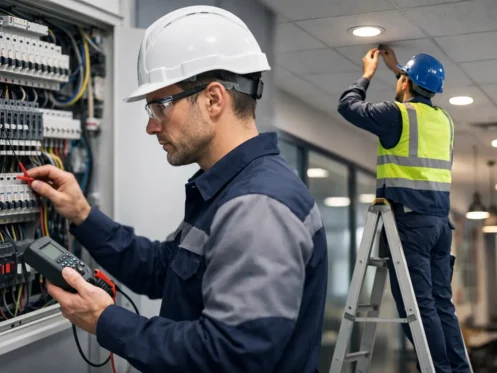
A tripped breaker during a busy shift is more than an inconvenience. It can stop point-of-sale systems, spoil refrigerated inventory, interrupt production, and create an immediate safety concern for employees and customers. The best commercial electrical maintenance tasks are the ones that identify stress on your electrical system before a small warning becomes a shutdown, fire risk, or expensive emergency repair.
For offices, retail spaces, restaurants, warehouses, and rental commercial properties, maintenance should not mean simply replacing a lamp when it burns out. A useful plan looks at the equipment employees use every day, the capacity behind it, and the warning signs that often go unnoticed until something fails.
Why Commercial Electrical Maintenance Needs a Plan
Commercial electrical systems work harder than many people realize. Equipment cycles on and off throughout the day, lighting stays on for long hours, employees plug in chargers and appliances wherever outlets are available, and seasonal heating or cooling adds major demand. In older buildings around Mebane and the surrounding area, the system may also be supporting loads that did not exist when the property was built.
Regular maintenance helps protect people first, but it also protects operations. It gives property owners a clearer picture of equipment condition, helps budget for upgrades, and reduces the chance that a problem will surface at the worst possible time. The right schedule depends on the building, its age, hours of operation, and the type of equipment it powers. A small professional office does not need the same approach as a restaurant kitchen or light industrial facility.
Best Commercial Electrical Maintenance Tasks to Prioritize
Inspect panels, breakers, and electrical connections
The electrical panel is the control center of the building. It should be accessible, clearly labeled, dry, and free of stored materials. During a professional inspection, a licensed electrician can look for corrosion, heat damage, loose connections, damaged breaker components, missing knockouts, improper wiring, and signs that the panel is operating beyond its intended capacity.
Pay attention to breakers that trip repeatedly. Resetting a breaker may restore power temporarily, but repeated tripping is a message, not a fix. The cause could be an overloaded circuit, failing equipment, a loose connection, a ground fault, or a panel issue that needs diagnosis. Continuing to reset it without identifying the cause can allow overheating or equipment damage to worsen.
Panel labels matter as well. Accurate labeling saves time during an outage and allows staff to isolate a circuit more safely in an emergency. If labels are vague, incorrect, or handwritten so poorly that no one can read them, add panel documentation to the maintenance plan.
Look for heat, damage, and warning signs at outlets and switches
Outlets and switches receive constant use in commercial settings, especially near workstations, break rooms, reception areas, and service counters. Loose outlets, cracked covers, discolored wall plates, buzzing sounds, sparks, warmth, or a burning odor should be addressed right away. These are not cosmetic problems. They can point to damaged wiring, worn devices, loose terminal connections, or overloading.
Employees should know to report these signs instead of working around them. A power strip placed over a damaged outlet or an extension cord run across a walkway may seem like a quick solution, but it can add fire and trip hazards. Maintenance should include checking that permanent receptacles are available where power is actually needed.
Wet or damp locations deserve special attention. Restrooms, kitchens, utility areas, exterior locations, and similar spaces may require GFCI protection. A licensed electrician can verify that protective devices are installed correctly and functioning as intended.
Test emergency and exit lighting
Emergency lighting is easy to overlook because it sits quietly in the background until the building loses power. When it is needed, however, it must work immediately. Test emergency fixtures, battery backup units, illuminated exit signs, and exterior egress lighting on a regular schedule. Record the results and replace failing batteries, lamps, or fixtures promptly.
For many commercial properties, this is also a life-safety and compliance issue. Occupants need a clear path to exit during a power outage, smoke event, or other emergency. Dim exit signs, dead emergency batteries, and poorly lit stairwells can create a serious risk even if the rest of the electrical system appears normal.
Maintain interior and exterior lighting
Lighting maintenance goes beyond replacing burned-out bulbs. Flickering fixtures, humming ballasts, lights that take too long to start, and uneven illumination can indicate aging components or voltage issues. In customer-facing areas, poor lighting affects safety and the appearance of the business. In warehouses, loading areas, and parking lots, it can affect visibility, security, and employee safety.
LED upgrades can reduce energy use and maintenance frequency, but the right fixture and control setup still matters. A space with motion sensors, timers, photocells, or dimmers should have those controls checked as part of routine maintenance. If lights stay on when they should not, cycle constantly, or fail to respond to controls, the problem may be in the fixture, wiring, sensor, or control device.
Check surge protection and grounding
Sensitive electronics are now part of nearly every business operation. Computers, networking equipment, security systems, point-of-sale terminals, refrigeration controls, and smart building devices can all be affected by power surges. Whole-building surge protection can help reduce exposure to voltage spikes, but it should be inspected periodically and replaced when its status indicator shows it is no longer providing protection.
Grounding and bonding are equally important, though they are less visible. Proper grounding helps provide a safe path for fault current and supports the operation of protective devices. Problems with grounding, loose bonding connections, or outdated electrical equipment should be evaluated by a qualified electrician, not handled as a staff maintenance project.
Review cords, power strips, and temporary power use
Temporary power has a habit of becoming permanent. Extension cords under rugs, overloaded power strips behind desks, and daisy-chained surge strips are common in busy commercial spaces. They are also preventable sources of overheating, damaged cords, and trip hazards.
Walk the property with an eye for how power is actually being used. If an area relies on extension cords every day, the long-term answer is usually additional outlets or a properly designed circuit, not another power strip. Remove cords with cracked insulation, loose plugs, or bent prongs from service immediately.
Watch for changes in electrical demand
A maintenance plan should be updated whenever the business changes. New refrigeration equipment, additional computers, commercial kitchen appliances, EV charging, expanded workstations, upgraded HVAC equipment, or a tenant build-out can all change the load on the electrical system.
Before adding major equipment, have the available capacity reviewed. An electrical panel upgrade, new dedicated circuit, or service upgrade may be needed to support the change safely. Planning this work before installation avoids nuisance tripping, unreliable equipment performance, and costly last-minute corrections.
What Staff Can Check and What Requires an Electrician
Property managers and business owners can take an active role by reporting flickering lights, damaged cords, warm outlets, breaker trips, unusual odors, and equipment that loses power. They can also keep electrical rooms clear, make sure panels remain accessible, and maintain records of recurring issues.
Opening panels, tightening electrical connections, replacing breakers, or attempting to diagnose wiring faults should be left to a licensed professional. Commercial electrical work involves live components, high fault current, code requirements, and system-specific conditions that cannot be judged safely from the outside. A quick repair that does not address the root cause can create a larger problem later.
Build a Schedule Around Your Property
Some tasks belong in a monthly walk-through, including checking visible cords, outlets, lighting, and electrical-room access. Emergency lighting testing and more detailed inspections should follow the needs of the property, equipment manufacturers, applicable safety requirements, and the building’s risk level. High-use facilities may need more frequent attention than a lightly occupied office.
Keep a simple maintenance record with dates, observations, repairs completed, recurring breaker trips, and equipment additions. This gives an electrician useful information during service calls and helps owners spot patterns. If one circuit trips whenever a particular piece of equipment starts, that history speeds up diagnosis.
For commercial property owners who want permanent repairs, clear explanations, and practical recommendations, Mebane Electrical Services can assess electrical concerns before they interrupt the workday. The best time to schedule maintenance is while the system is still working – when there is time to make a safe, well-planned repair instead of reacting to an outage.