
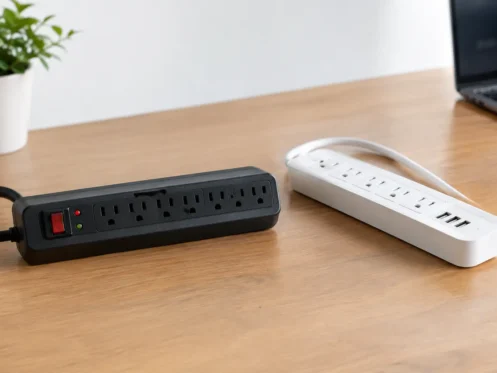
A surge protector versus power strip decision may seem minor until a lightning strike, utility switching event, or wiring problem damages the devices plugged into it. Both products add outlets where you need them, but they do not provide the same level of protection. Knowing the difference helps you make safer choices for electronics, appliances, and your property.
What a Power Strip Does
A power strip is primarily an outlet extender. It plugs into one wall receptacle and gives you several places to plug in low-power devices, such as a lamp, phone charger, computer accessories, or television components.
Most basic power strips include a switch and may include a resettable circuit breaker. That breaker can help prevent the strip itself from being overloaded. It does not, however, protect connected equipment from a sudden voltage spike.
Think of a power strip as a convenient way to distribute ordinary power. It is useful when the combined load is appropriate for the circuit and the strip is used as intended. It is not a substitute for installing additional outlets where they are needed, and it should never be treated as permanent wiring.
A power strip is not the right choice for high-demand equipment. Space heaters, window air conditioners, microwaves, refrigerators, sump pumps, hair tools, and similar appliances should plug directly into a properly grounded wall outlet. These appliances can draw enough current to overheat a strip, extension cord, plug, or outlet connection.
What Makes a Surge Protector Different?
A surge protector looks much like a power strip, but it contains components designed to divert or absorb excess voltage during a transient surge. A surge is a short, sharp increase in voltage that can occur during a nearby lightning strike, a power outage restoration, utility work, or the cycling of large equipment such as HVAC systems.
Sensitive electronics are especially vulnerable because their circuit boards operate at low voltages. A surge may not always cause immediate, obvious failure. It can also weaken internal components over time, leading to intermittent problems or a shorter service life.
Surge protectors are commonly rated in joules. In simple terms, the joule rating indicates how much surge energy the unit is designed to handle before its protective components are depleted. A higher rating can be appropriate for valuable or sensitive electronics, but it is not the only factor that matters. Choose a product that is listed by a recognized testing laboratory, has a grounded plug, and is rated for the equipment you plan to connect.
Many quality surge protectors have an indicator light that shows whether protection is active. That light deserves attention. Surge protectors do not last forever. After absorbing a significant surge, some may continue supplying power while no longer providing meaningful protection. If the protection light is off, the unit is damaged, the cord is frayed, the housing is discolored, or the outlets feel loose, replace it.
Surge Protector Versus Power Strip: Which One Do You Need?
Use a basic power strip when you simply need additional outlets for low-demand, noncritical items and there is no particular need to guard against voltage spikes. For example, a strip may be reasonable for a few table lamps or charging cables in a living area, provided it is not overloaded.
Use a surge protector for electronics that contain sensitive circuit boards or hold valuable data. Desktop computers, monitors, televisions, gaming systems, routers, modems, smart-home hubs, and charging stations are common examples. A point-of-use surge protector adds a useful layer of defense for these devices.
Still, a plug-in surge protector is only one layer of protection. It cannot correct every electrical problem in a home or commercial space. It will not fix a loose outlet, an overloaded circuit, improper grounding, repeated breaker trips, voltage irregularities caused by a service issue, or wiring that has deteriorated with age.
For homes with frequent storms, expensive electronics, or newer equipment throughout the property, whole-home surge protection at the electrical panel may be worth considering. A properly installed whole-home device helps limit surges entering through the electrical service. Point-of-use protectors can then provide added protection at the equipment level. These approaches work together rather than competing with one another.
Safe Use Matters as Much as the Product
Even a well-made surge protector can become a hazard when it is used incorrectly. Plug it directly into a grounded wall outlet. Avoid connecting one power strip or surge protector to another, a practice often called daisy chaining. This can overload the original outlet or circuit and creates a greater risk of heat damage.
Keep strips and surge protectors out of damp locations unless they are specifically designed and listed for that environment. Do not run their cords under rugs, through doorways, or where furniture can crush them. Heat needs a path to escape, and a damaged cord can expose people to shock or fire risk.
Also pay attention to the total load, not just the number of open outlets. Six phone chargers typically draw far less power than one portable heater. If a strip feels hot, the plug appears browned, the outlet is loose, or the breaker trips when equipment is connected, stop using the setup. Those are signs that deserve a closer look.
Older homes can present additional concerns. Two-slot outlets, ungrounded receptacles, worn wiring, and limited outlet locations often lead people to rely heavily on strips and extension cords. The safer permanent repair may be installing properly grounded outlets, replacing worn receptacles, or evaluating the electrical panel and branch circuits.
When a Surge Protector Cannot Solve the Problem
Some electrical symptoms point beyond a plug-in accessory. Repeated surges, flickering lights, outlets that stop working, buzzing sounds, a burning odor, warm wall plates, and breakers that trip repeatedly should not be dismissed as everyday inconveniences.
A surge protector also cannot make an overloaded circuit safe. If your home office, entertainment center, or retail workstation needs several strips to operate, the area may need more outlets or a dedicated circuit. The same is true when you are adding a refrigerator, workshop equipment, a generator connection, or an EV charger. These needs call for properly planned electrical work, not a bigger strip.
For property owners in Mebane and nearby communities, a licensed electrician can identify whether the source is a worn receptacle, a grounding issue, inadequate circuit capacity, panel concerns, or a problem with the utility service. Thorough diagnostics matter because replacing an accessory may hide the symptom while the underlying hazard remains.
How to Choose and Replace a Surge Protector
Before buying, check the wattage or amperage requirements of the equipment you intend to connect. Select a surge protector with enough outlets and spacing for larger plugs, but do not buy more outlets as an excuse to connect more high-draw appliances. For computer and entertainment equipment, look for a clearly marked protection-status indicator and a cord length that reaches the outlet without an extension cord.
Replace the protector after a known major surge, lightning event, or loss of its protection indicator. Replace it sooner if it is old and its history is unknown, especially in a rental property, office, or recently purchased home. There is no single replacement schedule that fits every product because actual surge exposure matters, but treating a surge protector as a permanent purchase is a mistake.
The right accessory can protect the equipment plugged into it. The right electrical installation protects the system behind it. If your outlets, circuits, or panel are showing signs of strain, addressing the cause now can prevent a much more expensive problem later.