
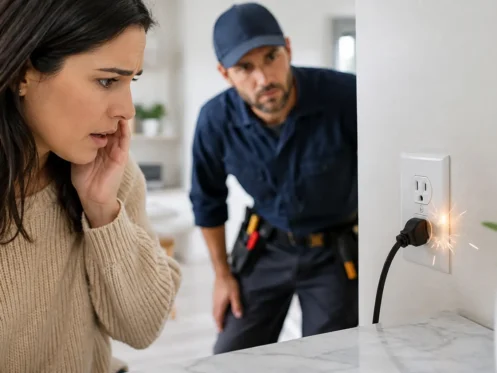
A wall outlet should not make a noticeable buzzing sound. If you can hear it from across the room, hear it when plugging in an appliance, or notice it alongside heat, a burning smell, or flickering lights, treat it as a warning sign. Outlet buzzing causes can range from a loose device connection to a damaged wire or an overloaded circuit, and the safest next step depends on what else you are seeing.
A buzzing outlet is not a repair to put off until a more convenient time. Electrical problems can worsen behind the wall, where homeowners cannot see loose connections, overheating conductors, or damaged insulation. Turning off power to the affected circuit and arranging a professional inspection is the right move when there is any question about safety.
What a Buzzing Outlet May Be Telling You
Electricity itself is silent. The sound comes from a component vibrating, arcing, or struggling under an electrical load. Sometimes the noise is from a plugged-in device rather than the receptacle. A phone charger, dimmer-compatible LED bulb, or power adapter can make a faint hum during normal operation. But a sound that clearly comes from the outlet, especially a sharp buzz, crackle, or sizzle, deserves attention.
The difference matters. Unplugging the device and listening again can help narrow down the source. If the sound stops when the device is removed, the appliance, charger, or cord may be the issue. If it continues, or returns with different devices, the outlet or wiring needs to be checked.
Loose Wiring Connections
Loose connections are among the most common outlet buzzing causes. Wires connected to the outlet terminals, wire splices inside the electrical box, or the outlet itself can loosen over time. This is more likely in older homes, heavily used outlets, and properties where previous work was not completed to current standards.
A loose connection can create resistance and small electrical arcs. That arcing may produce a buzz or crackle, and it generates heat at the same time. The outlet may still work, which can make the problem easy to dismiss. However, a functioning outlet is not necessarily a safe outlet.
A Worn or Damaged Receptacle
Outlets wear out. Repeatedly inserting and removing plugs can weaken the internal contact points that grip the plug blades. If a plug feels loose, slips out easily, or only works when held at a certain angle, the receptacle may no longer make a secure connection.
A damaged outlet can buzz when it is carrying power to an appliance. You may also see discoloration around a slot, a cracked faceplate, or melted plastic. Do not continue using an outlet with any of these signs. Unplug what you can safely remove, switch off the circuit at the electrical panel if possible, and call a licensed electrician.
Overloaded Circuits and Heavy Electrical Demand
An outlet may buzz because the circuit is being asked to carry more than it was designed to handle. Space heaters, portable air conditioners, microwaves, hair dryers, power tools, and older refrigerators can draw substantial power. Plugging multiple high-demand items into one outlet or power strip can overheat connections and stress the circuit.
This does not always mean the outlet alone is defective. The underlying issue could be a circuit that is too small for the room’s current needs, poor wiring connections elsewhere on the circuit, or an aging electrical panel. Homes built before modern electronics, home offices, and EV charging became common may need circuit additions or panel upgrades rather than another temporary workaround.
Faulty Appliances, Cords, and Chargers
Before assuming the wall outlet is at fault, consider what is plugged into it. A damaged cord, failing appliance motor, inexpensive adapter, or charger with a loose internal component can create a hum or buzzing noise. Look for frayed insulation, bent plug blades, scorch marks, or a cord that gets unusually warm.
Do not test a suspect appliance by repeatedly plugging it into other outlets. That can move the hazard to another location. Disconnect it and have the appliance repaired or replaced as appropriate. If you are unsure whether the appliance or outlet is the source, an electrician can test the circuit and receptacle safely.
Improper Repairs or Older Wiring Methods
Some electrical issues trace back to work completed years ago. An outlet may have been installed with loose terminal screws, improperly secured wire connections, an undersized electrical box, or wiring methods that do not meet current safety expectations. Older homes in the Mebane, Durham, and Burlington area can also have aging wiring that needs a careful evaluation before new loads are added.
A buzzing outlet can be the first obvious symptom of a larger issue. This is why replacing only the face of the outlet without diagnosing the wiring behind it is not a dependable repair. The goal should be to find the source of the noise and permanently resolve the problem.
What to Do When an Outlet Starts Buzzing
Start by reducing risk, not by trying to diagnose energized wiring. Unplug devices from the outlet if you can do so without touching damaged or hot components. If the outlet is warm, discolored, sparking, smoking, or smells like burning plastic, leave it alone and turn off the circuit breaker if you can safely identify it.
Do not remove the outlet cover or attempt to tighten wiring while the circuit is live. Even if a breaker has been turned off, electrical boxes can contain wiring from more than one circuit. A licensed electrician has the testing equipment and training to verify that power is off and inspect the installation correctly.
For an active emergency, such as smoke, flames, or a strong burning odor, leave the building and call emergency services. Once the immediate danger is addressed, arrange for an electrical inspection before restoring power to that circuit.
Signs You Need Prompt Electrical Service
A faint sound from a specific charger may not be an emergency, but certain symptoms should move a buzzing outlet to the top of your repair list. Schedule service promptly if you notice any of the following:
- The outlet buzzes, crackles, pops, or hisses after a device is unplugged.
- The cover plate or plug feels warm or hot to the touch.
- You see browning, black marks, melted plastic, or sparks.
- Lights dim or flicker when appliances turn on.
- A breaker trips repeatedly, or a GFCI outlet will not reset.
- Plugs fit loosely, or the outlet stops working intermittently.
These symptoms can point to arcing, excessive heat, an overloaded circuit, or a failing component. Waiting may allow a small wiring defect to become a more expensive repair or a serious fire risk.
Why a Professional Inspection Matters
A proper outlet repair involves more than installing a new receptacle. An experienced electrician checks the outlet condition, wire terminations, grounding, box fill, circuit load, breaker performance, and signs of heat damage. If the issue is located upstream at another outlet, switch, junction box, or panel connection, that investigation prevents the same problem from returning.
The solution depends on the cause. It may be as straightforward as replacing a worn outlet and correcting a loose connection. In other cases, the lasting repair could involve replacing damaged wiring, separating overloaded circuits, adding dedicated circuits for equipment, or upgrading an older panel.
Mebane Electrical Services approaches buzzing outlets with safety and clear communication first. A technician can explain what was found, what repair is recommended, and what the cost involves before work moves forward. That gives homeowners and business owners a practical path to a safe, lasting result.
Preventing Future Outlet Problems
Use outlets as they were intended. Avoid overloading power strips, do not run cords under rugs or through doorways, and replace damaged cords promptly. High-demand appliances should be plugged directly into a properly rated wall outlet, and equipment that requires a dedicated circuit should have one.
If your property has frequent breaker trips, limited outlets, flickering lights, or an older electrical panel, consider a broader electrical safety inspection. These issues often appear together as a home or business grows beyond the capacity of its original wiring.
A buzzing outlet is your electrical system asking for attention. Addressing it early with qualified service protects the people and property that matter most.