
A breaker that trips once may be a nuisance. A breaker that trips repeatedly, an outlet that feels warm, or lights that flicker when an appliance starts can be early warnings of a larger problem. This electrical home inspection checklist helps homeowners notice concerns before they become a shock hazard, fire risk, or costly emergency.
This is a visual, homeowner-level check, not a substitute for a professional electrical safety inspection. Never remove a panel cover, touch exposed wiring, or attempt a repair if you are unsure what you are seeing. Electrical problems are often hidden behind walls, inside panels, and at connection points where experience and proper testing matter.
Electrical Home Inspection Checklist: Start With What You Can See
Walk through the home in daylight and make notes as you go. You are looking for changes, damage, and patterns – especially in older homes, recently renovated spaces, garages, kitchens, bathrooms, and outdoor areas.
Check outlets and switches for cracked covers, loose devices, discoloration, scorch marks, buzzing, or a warm faceplate. An outlet or switch should sit firmly against the wall. If a plug falls out easily, the receptacle may be worn and may not hold the plug blades securely enough for safe use.
Pay attention to cords and plugs, too. Frayed cords, bent prongs, damaged insulation, and extension cords used as permanent wiring all deserve attention. Extension cords are intended for temporary use, not for powering a room full time or running large appliances.
Look at light fixtures for loose mounting, flickering bulbs, darkened trim, or a burning odor. Flickering can be as simple as a loose bulb, but it can also point to a failing fixture, poor connection, overloaded circuit, or service issue. If lights dim noticeably when the HVAC system, microwave, or other major appliance turns on, write that down for an electrician.
Use this quick visual checklist throughout the property:
- Outlets, switches, and cover plates are intact, secure, and free from heat damage.
- Plugs fit firmly and cords are not pinched under rugs, doors, or furniture.
- Light fixtures are secure and operate without flickering, buzzing, or unusual heat.
- Power strips are not daisy-chained or overloaded with high-demand equipment.
- Outdoor electrical covers close properly and protect receptacles from weather.
- The garage, attic, crawlspace, and utility areas have no exposed or damaged wiring.
A single item on this list does not always mean an immediate emergency. It does mean the issue is worth correcting before it gets worse.
Test GFCI and AFCI Protection Carefully
Ground-fault circuit interrupter, or GFCI, protection is designed to shut off power quickly when it detects an imbalance that could indicate electricity traveling through water or a person. In most homes, GFCI-protected receptacles are expected in locations such as bathrooms, kitchens, garages, laundry areas, unfinished basements, crawlspaces, and exterior areas.
Look for outlets with “TEST” and “RESET” buttons. With a small lamp plugged in, press TEST. The lamp should turn off. Press RESET and it should turn back on. If the outlet will not reset, has no power, or controls other outlets that are unexpectedly dead, schedule service rather than replacing it with a standard receptacle.
Arc-fault circuit interrupter, or AFCI, protection is usually located in the electrical panel and helps reduce fire risk from dangerous arcing faults. Because panel work involves live components even when individual breakers are off, homeowners should not remove the dead-front cover to investigate. You can note whether breakers trip repeatedly, but a licensed electrician should determine why.
Review the Electrical Panel From a Safe Distance
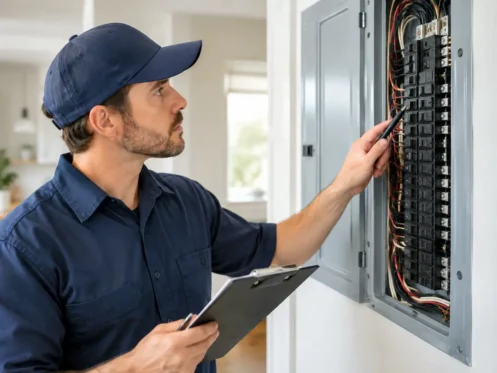
Your electrical panel tells an important part of the home’s electrical story. Keep the area around it clear and make sure every adult in the household knows where it is. The panel door should close properly, breakers should be labeled clearly, and there should be no signs of moisture, corrosion, heat damage, or a burning smell.
Open only the exterior panel door if it can be done without touching wiring or internal components. Do not remove the cover. Look for handwritten labels that no longer match the rooms they serve, blank breaker labels, double-labeled circuits, or breakers that will not stay in the ON position. Poor labeling may seem minor, but it slows down response when a problem occurs and often suggests that changes have been made over time without a clear circuit plan.
Older panels can still function safely in some situations, while others may be undersized for modern demand or have known reliability concerns. The right answer depends on the panel’s condition, capacity, installation quality, and the home’s electrical load. An electrician can calculate whether your service is adequate for additions such as an EV charger, generator interlock, hot tub, workshop equipment, or a major kitchen remodel.
Check High-Use Rooms and Major Appliances
Kitchens, bathrooms, laundry rooms, garages, and exterior spaces carry more electrical risk because they combine water, high-demand equipment, or both. In the kitchen, avoid routinely running several heat-producing appliances from one circuit through power strips or extension cords. Toasters, air fryers, coffee makers, microwaves, and portable heaters can draw more power than homeowners expect.
In bathrooms and laundry areas, confirm that outlets near water are GFCI-protected. A bathroom fan that is excessively noisy, slow to start, or stops working may need service, particularly if moisture is building up in the room. In the laundry room, watch for a dryer that trips a breaker or an outlet that becomes warm during use.
Outside, inspect visible receptacles, fixture boxes, and covers. Exterior outlets should be protected from rain and irrigation, and damaged covers should be replaced promptly. Pool, spa, and landscape lighting systems require extra caution. If there is any question about damaged underground wiring, recurring trips after rain, or equipment near water, stop using the affected circuit and call a professional.
Know the Warning Signs That Should Not Wait
Some findings belong on a repair list. Others need faster action. Turn off power to the affected circuit if you can do so safely and arrange prompt professional service if you notice a burning odor, smoke, sparking, sizzling or buzzing from an outlet or panel, visible melted plastic, or repeated breaker trips.
A tingling sensation from an appliance, switch, faucet, or metal surface is also urgent. Do not test it again. Keep others away from the area and have the electrical system evaluated. If there is an active fire, smoke, or immediate danger, call 911 first.
Repeated breaker trips should never be solved by installing a larger breaker or repeatedly resetting the same one. The breaker is responding to a condition such as an overload, short circuit, failing appliance, damaged wiring, or faulty connection. Resetting it once after unplugging devices may be reasonable. If it trips again, leave it off until an electrician identifies the cause.
When a Professional Inspection Makes Sense
A professional electrical inspection is a smart step before buying an older home, listing a property, beginning a renovation, adding high-demand equipment, or after storm damage. It is also worthwhile if the home still has two-prong outlets, frequent flickering, limited circuits, or years of piecemeal electrical changes.
For homeowners in Mebane and nearby communities, a licensed electrician can inspect the panel, grounding and bonding, circuit loading, protective devices, accessible wiring, outlets, switches, fixtures, and visible signs of unsafe past work. Just as important, they can explain the findings in plain language and separate immediate safety needs from improvements that can be planned over time.
A dependable electrical system should not leave your family guessing. If something looks, sounds, smells, or feels wrong, trust that instinct and have it checked before a small warning becomes a bigger repair.