
A flickering bank of lights, a warm outlet near a break room appliance, or a breaker that trips once a week can look like a small inconvenience. In a commercial property, those warning signs can also point to overloaded circuits, failing connections, or equipment that is working harder than it should. This commercial electrical maintenance guide helps business owners and property managers recognize what deserves attention before it turns into downtime, property damage, or a safety concern.
Commercial electrical maintenance is not about replacing parts on a calendar just to check a box. It is about understanding how a building is used, identifying wear before failure, and making repairs that address the source of the problem. A retail space, office, restaurant, warehouse, and multifamily property all place different demands on their electrical systems.
Start With the Electrical Loads Your Building Carries
Your maintenance plan should begin with a clear picture of what the electrical system supports. That includes lighting, HVAC equipment, computers, refrigeration, kitchen equipment, machinery, security systems, exterior signs, and any recent additions such as EV chargers.
Loads change over time. A space that once supported a few desks may now have additional monitors, printers, servers, and charging stations. A small warehouse may add equipment without considering whether the existing circuits and panel capacity can safely carry the added demand. When upgrades are made one piece at a time, the electrical system can quietly become the limiting factor.
A licensed electrician can assess panel capacity, circuit loading, grounding, and the condition of existing components. This is especially valuable for older commercial buildings in the Mebane, Durham, Burlington, and Chapel Hill area, where past renovations may have left behind outdated equipment or poorly documented changes.
What a Commercial Electrical Maintenance Visit Should Cover
The right scope depends on the building, its age, occupancy, and equipment. A basic visual walkthrough may be enough for a low-demand office with newer electrical systems. A restaurant, medical office, production space, or property with frequent tenant turnover usually needs a more detailed inspection.
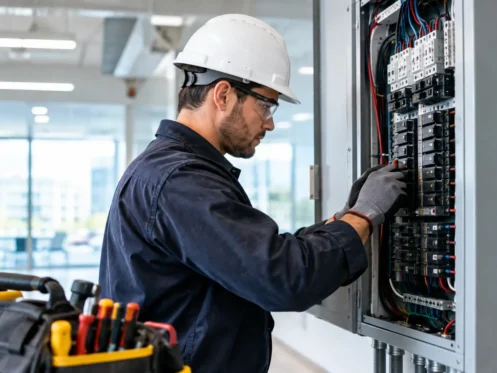
During a professional maintenance visit, an electrician may inspect electrical panels for corrosion, heat damage, loose connections, labeling issues, and signs of moisture intrusion. They can test breakers and safety devices where appropriate, check outlets and switches in high-use areas, and look at lighting circuits, emergency lighting, and exterior fixtures.
The inspection should also consider the parts of the building people tend to overlook. Electrical rooms need clear access and should not become storage areas. Outdoor disconnects and equipment enclosures need protection from weather and physical damage. Damaged conduit, missing cover plates, exposed wiring, and extension cords being used as permanent wiring all deserve prompt correction.
A good service provider explains what was found in plain language. Not every issue has the same urgency. Some repairs should happen immediately because they affect safety or business operations. Others can be planned into a future upgrade. Clear priorities and upfront pricing help you make informed decisions without guessing.
Warning Signs That Call for Prompt Service
Electrical problems rarely improve on their own. If employees or tenants report repeated issues, document where and when they occur. Patterns help an electrician diagnose the actual cause rather than simply reset a breaker and move on.
Call for professional service if you notice burning odors, buzzing from a panel or outlet, warm wall plates, sparks, discoloration, water near electrical equipment, or breakers that trip repeatedly. These are not maintenance items to postpone.
Other signs are less dramatic but still meaningful. Lights that dim when HVAC equipment starts, outlets that no longer hold plugs securely, frequent lamp failures, and equipment that loses power during normal use may indicate circuit, connection, voltage, or load problems. The cause can range from a worn device to a panel that needs upgrading, so proper diagnosis matters.
Build a Schedule Around Risk, Not Habit
There is no single maintenance interval that fits every commercial property. The best schedule reflects the consequences of failure and the conditions inside the building.
A professional office with modern equipment may benefit from a yearly electrical review, particularly before a renovation, lease turnover, or new equipment installation. Buildings with heavy electrical demand, moisture exposure, grease, dust, vibration, or long operating hours may need more frequent attention. Emergency systems, exit lighting, and equipment tied to life safety or business continuity deserve their own testing schedule based on applicable requirements and manufacturer guidance.
Between formal service visits, staff can perform simple non-electrical observations. Keep electrical rooms accessible, report damaged cords and cover plates, avoid overloading power strips, and pay attention to recurring breaker trips. Staff should never remove panel covers, work inside electrical equipment, or attempt to repair wiring. Those tasks require a qualified, licensed electrician.
Make Panel Labels and Documentation Useful
An electrical panel is much easier to maintain when its circuits are clearly and accurately labeled. Vague labels such as “back room” or “lights” create delays during a power issue and increase the chance that someone shuts off the wrong circuit.
Update panel directories after renovations, tenant improvements, or equipment changes. Keep records of electrical repairs, panel upgrades, inspections, and recurring problems. Note the date, location, equipment affected, symptoms, and repair performed. This history gives your electrician useful context and can prevent repeated troubleshooting costs.
Documentation is particularly helpful for property managers overseeing multiple suites or buildings. It creates a clearer handoff between maintenance staff, tenants, owners, and contractors, while helping everyone respond more calmly when an electrical issue occurs.
Plan Upgrades Before They Become Emergency Repairs
Maintenance can extend the useful life of electrical equipment, but it cannot make undersized or obsolete equipment suitable for modern demand. If a panel is full, circuits are routinely overloaded, or the building lacks capacity for planned equipment, an upgrade may be the more cost-effective path.
This often comes up when businesses add commercial kitchen equipment, expand workstations, install new HVAC systems, improve exterior lighting, add backup power, or prepare for electric vehicle charging. Planning the electrical work before the equipment arrives reduces installation delays and helps avoid expensive last-minute changes.
There are trade-offs. A targeted circuit addition may solve an immediate issue at a lower initial cost, while a panel replacement may provide better long-term capacity and reliability. The right decision depends on the condition of the current system, the building’s growth plans, available electrical service, and the cost of future disruptions. An experienced electrician should explain both options honestly.
Do Not Treat Emergency Repairs as a Maintenance Plan
Quick response matters when a business loses power or an electrical problem affects operations. But repeated emergency calls often signal a larger issue that has not been fully addressed. Resetting a tripped breaker may restore power temporarily, yet it does not answer why the breaker tripped.
After an urgent repair, ask what caused the failure and whether related equipment should be inspected. A permanent repair may involve replacing a failed component, redistributing loads, correcting damaged wiring, or upgrading a circuit. That follow-up is what protects the building from a repeat problem during the next busy day.
For local businesses and property managers, Mebane Electrical Services provides commercial diagnostics, repairs, inspections, panel work, lighting service, and planned upgrades with clear communication throughout the process. The goal is not to create unnecessary work. It is to identify the issue, explain the options, and complete work that supports a safer, more dependable property.
A well-maintained electrical system stays mostly out of sight, which is exactly how it should be. Pay attention to the small changes, keep good records, and bring in a licensed professional before a minor electrical concern has the chance to interrupt your business.