
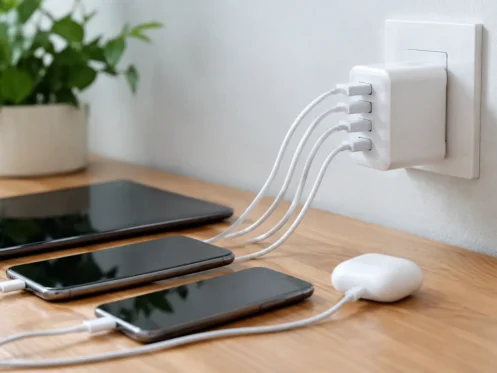
A new EV charger can be one of the largest electrical loads in a home. So, can chargers overload panels? Yes, they can contribute to an overloaded panel or service, particularly in older homes or properties that already have high-demand equipment. But a charger does not automatically mean you need a panel replacement. The answer depends on your electrical capacity, existing loads, charging setup, and how the system was installed.
The safest way to find out is through a professional load calculation and panel inspection. Guessing based on the number printed on your breaker panel can lead to an expensive mistake or, worse, an unsafe installation.
Can Chargers Overload Panels in a Typical Home?
A panel is designed to distribute electricity through individual circuits. Each circuit breaker protects its wiring from carrying more current than it was designed to handle. An overload happens when equipment demands more electricity than a circuit, panel, or incoming electrical service can safely provide.
For most homeowners, the concern is not a few phone chargers, laptop chargers, or a battery charger for small tools. Those devices use relatively little power. The question becomes more serious with Level 2 EV chargers, electric vehicle charging equipment, whole-home battery systems, golf cart chargers, large shop equipment, or several charging loads operating at once.
A Level 2 EV charger may draw 32, 40, 48, or more amps for hours at a time. Because EV charging is considered a continuous load, the electrical system must be sized with additional capacity in mind. For example, a charger that operates at 40 amps generally requires a circuit rated for at least 50 amps. That circuit, its wiring, the breaker, and the panel capacity all need to be matched correctly.
The issue is often not that the panel has no empty breaker spaces. A panel can have open spaces and still lack enough electrical capacity for a new charger. Conversely, a crowded panel may have adequate service capacity if it is evaluated and configured correctly. This is why a qualified electrician looks beyond the panel door.
The Difference Between a Circuit Overload and a Panel Overload
These terms are often used interchangeably, but they describe different problems.
A circuit overload is limited to one branch circuit. Plugging a portable EV charger, space heater, power tools, and other equipment into the same garage circuit can exceed the circuit rating. The breaker may trip repeatedly, outlets may feel warm, or lights on that circuit may dim. A breaker trip is a warning that should not be ignored or bypassed.
A panel or service overload involves the total electrical demand of the property. Your home may have a 100-amp, 150-amp, 200-amp, or larger service. A large charger adds to the demand from HVAC equipment, an electric range, dryer, water heater, pool equipment, well pump, and other loads. If too much equipment runs at the same time, the service equipment may be pushed beyond what it can safely support.
Not every appliance runs at full power simultaneously, which is why electricians use a formal load calculation instead of simply adding every breaker size together. Still, modern homes can outgrow electrical systems that were installed decades ago, especially when an EV charger is added to an older 100-amp service.
Why Older Panels Need Extra Attention
Many homes in Mebane and the surrounding area were built before electric vehicles, high-efficiency heat pumps, induction ranges, and home backup systems became common. Their original electrical service may have been sufficient for the home at the time, but household demand has changed.
Older panels can also present concerns unrelated to capacity. Corrosion, loose connections, damaged breakers, outdated equipment, double-tapped breakers, unmarked circuits, and previous do-it-yourself modifications can all affect safety. Adding a high-demand charger to a compromised panel does not solve those underlying issues.
A professional inspection can identify whether the existing panel is in good condition, whether a new dedicated circuit is feasible, and whether an upgrade would provide a safer long-term solution. In some cases, the work may involve adding a circuit and repositioning breakers. In others, the right answer is a panel replacement or a service upgrade from the utility connection inward.
Signs Your Electrical System May Be Near Its Limit
Electrical capacity issues are not always obvious. Your EV charger may work normally at first, then problems appear during the hottest or coldest part of the year when heating and cooling equipment operates more often.
Pay attention if breakers trip repeatedly, lights flicker or dim when major appliances start, outlets or the panel feel warm, or you notice buzzing, burning odors, discoloration, or corrosion. A charger that shuts off unexpectedly, fails to reach its intended charging rate, or trips its breaker should also be evaluated.
Do not solve these symptoms by installing a larger breaker. Oversizing a breaker without properly sized wiring can allow conductors to overheat before the breaker responds. It can create a fire hazard and damage equipment. Electrical repairs should address the cause, not just stop the immediate inconvenience.
What an Electrician Checks Before Installing a Charger
A proper charger evaluation starts with the electrical service size and a load calculation based on the property’s actual equipment. The electrician will consider heating and cooling, cooking appliances, water heating, dryers, pumps, existing EV equipment, planned renovations, and other significant loads.
They will also inspect panel condition, available breaker spaces, breaker compatibility, grounding and bonding, wire sizing, and the path from the panel to the charger location. A detached garage, long driveway, or charger mounted far from the panel can affect wiring requirements and project cost.
The charger itself matters, too. Some models can be configured to a lower amperage when a home does not have capacity for maximum-rate charging. That may be a reasonable option for drivers who charge overnight and do not need the fastest possible charge. It is a trade-off: lower electrical demand and lower installation cost in exchange for longer charging times.
Smart charging features can help manage when a vehicle charges, such as overnight hours or periods when household demand is lower. However, technology is not a substitute for correctly sized electrical equipment. The circuit and panel must still be safe for the charger’s configured load.
When a Panel Upgrade Makes Sense
A panel upgrade is often worth considering when the current service is undersized, the panel is in poor condition, there is no practical space for a dedicated charger circuit, or future plans will add more electrical demand. Those plans may include a heat pump, electric water heater, remodeled kitchen, workshop, hot tub, generator connection, or another EV.
Upgrading before a problem occurs can also make sense when a homeowner wants one coordinated project rather than repeated electrical modifications over several years. A modern panel can provide safer distribution, room for additional circuits, clearer labeling, and a better foundation for future improvements.
That said, an upgrade is not automatically the correct recommendation. A well-maintained 200-amp panel with available capacity may support a charger without major work. Honest electrical guidance means recommending the scope that the property needs, not the largest possible project.
Start With a Capacity Check, Not a Guess
An EV charger should make daily life easier, not leave you wondering whether your electrical system can keep up. Mebane Electrical Services can evaluate your panel, calculate the load, explain your options clearly, and install the right solution for your home or business.
If your property shows signs of electrical strain or you are planning to add a charger, schedule an assessment before installation. A careful evaluation today can protect your equipment, your investment, and the people who rely on your property every day.